
Mount Meru National Park
Tanzania's Hidden Volcanic Gem
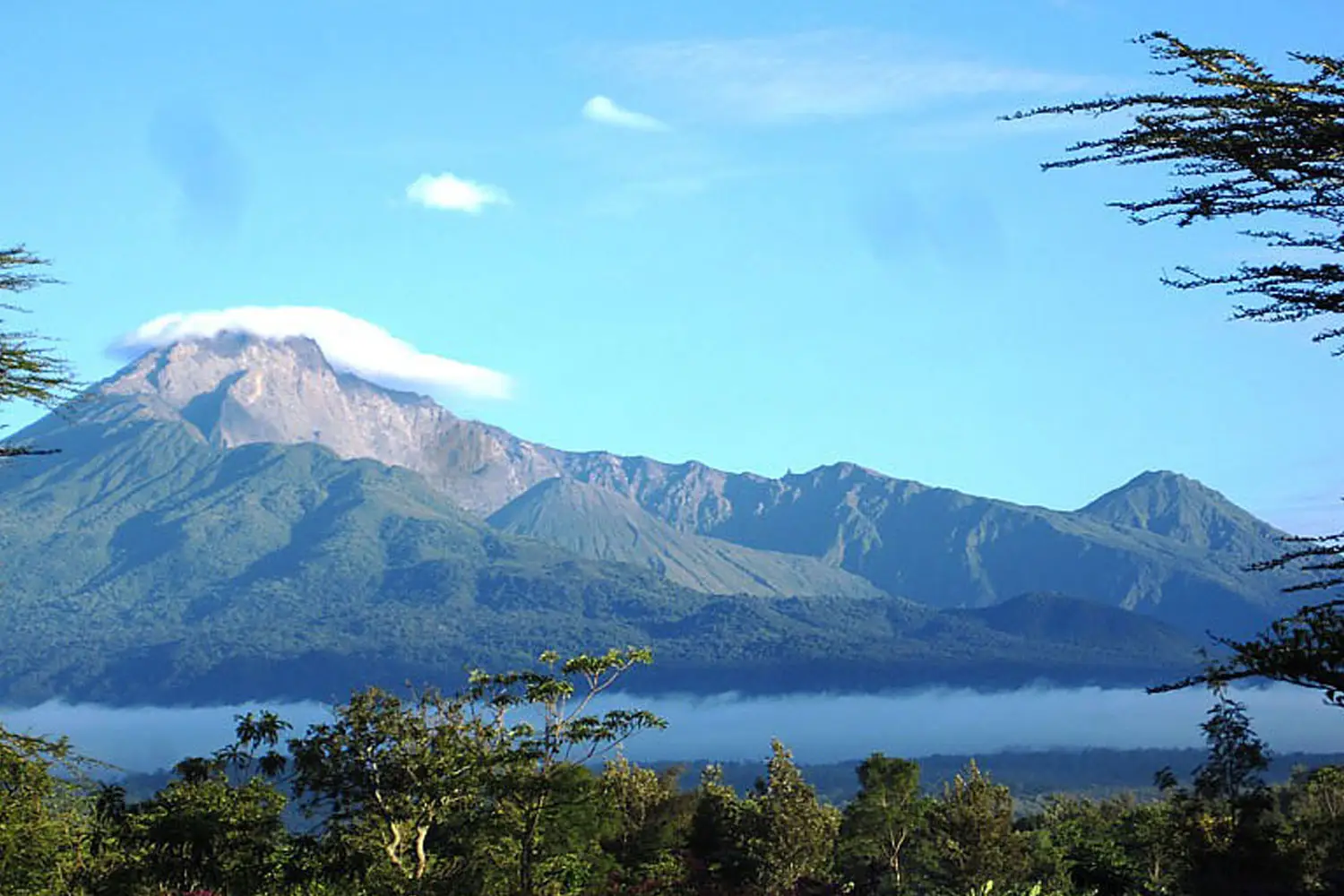
"Where wildlife roams below the clouds, and Africa's fifth-highest peak pierces the sky."
Few places on Earth offer a wilderness experience quite like Mount Meru. Towering at 4,566 meters (14,980 feet) , this dormant stratovolcano is the centrepiece of Arusha National Park – a compact but breathtaking sanctuary often overshadowed by its famous neighbour, Kilimanjaro . But those who venture here discover something extraordinary: a mountain you can climb while watching giraffes graze at its base.
A Living Museum of History
The area that now forms Arusha National Park has long been inhabited by local communities, including the Meru people and pastoralist groups such as the Maasai, who used the surrounding lands for farming and grazing . The name “Meru” itself reflects the mountain’s sacred significance to the communities that have lived in its shadow.
In 1940, the Ngurdoto Crater area was designated as a forest reserve to protect the mountain forests and water sources flowing from Mount Meru . The park was officially established in 1960, shortly before Tanzania gained independence, combining the Ngurdoto Crater region, the Momella Lakes, and the slopes of Mount Meru into a single protected area . Initially named Ngurdoto Crater National Park, it was renamed Arusha National Park in 1967 after the indigenous Waarusha people .
Arusha National Park has been described as “the diamond amid the shadows of the giants,” offering breathtaking perspectives of both Mount Meru and Mount Kilimanjaro .
The Mountain: Africa's Fifth-Highest Peak
Mount Meru is Tanzania’s second-highest mountain and the fifth-highest in Africa . Its asymmetrical cone dominates the horizon, offering a challenging but immensely rewarding trekking experience.
Summit: Socialist Peak (4,566m) – The highest point, named by the Tanzanian government in the 1960s .
The Crater: Unlike Kilimanjaro, Mount Meru has a spectacular volcanic crater that trekkers can observe up close. The summit route passes along the crater rim, offering jaw-dropping views of the inner caldera .
Views of Kilimanjaro: On clear days, Mount Meru’s summit offers unobstructed views of its famous neighbour, Kilimanjaro, floating above the clouds .
Wildlife: A Safari on Foot
Mount Meru National Park is one of the few places in Tanzania where you can combine wildlife viewing with trekking . The park is home to an impressive diversity of animals.
Mammals you can expect to see:
Giraffes – Reticulated giraffes are commonly seen on the lower slopes, especially near Momella Gate. The park boasts one of the world’s largest populations of giraffes .
Buffalo – Large herds roam the open plains; sightings are thrilling but require caution
Zebras – Often grazing in small herds on the grasslands
Colobus monkeys and blue monkeys – Swinging through the forest canopy
Baboons – Large troops are frequently encountered on the trails
Leopards and spotted hyenas – Occasionally spotted in the deeper forest areas
Dik-diks, bushbucks, and waterbucks – Small antelope species found in the forest and grassland
Elephants – While rare in the park, they are occasionally seen in the forested areas
Birdwatcher’s paradise: Over 400 bird species have been recorded in the park, including forest birds, raptors, and migratory species . The Momella Lakes are a hotspot for birdwatching, with large flocks of pink-hued flamingos . Other notable species include the grey-crowned crane, African fish eagle, Hartlaub’s turaco, and secretary birds .
The Ngurdoto Crater: "Little Ngorongoro"
One of the park’s most spectacular features is Ngurdoto Crater – a steep-walled volcanic caldera often referred to as the “Little Ngorongoro” . Although smaller than its famous counterpart, this 3.2-kilometre wide crater offers excellent wildlife viewing with buffalo, warthogs, and waterbucks grazing on the crater floor. It is covered in dense rainforests, and unlike Ngorongoro Crater, Ngurdoto is only accessible via walking safaris, offering an intimate experience with nature .
Momella Lakes: Flamingo Paradise
The Momella Lakes are a series of shallow, alkaline lakes in delicate pastel shades – each with a slightly different colour due to variations in mineral content . There are seven lakes in the chain: Big Momella, Small Momella, El Kekhotoito, Kusare, Rishateni, Lekandiro, and Tulusia, formed from volcanic debris over 250,000 years ago .
These lakes are famous for:
Flamingos – Thousands of greater and lesser flamingos flock here, creating a breathtaking pink spectacle
Waterbirds – Pelicans, storks, herons, and egrets are common
Canoeing – Paddle across the lakes for a unique perspective on the wildlife and scenery
The Momella Route: Trekking Mount Meru
The official route to the summit is the Momella Route, which typically takes 3 to 4 days .
Day 1: Momella Gate – Miriakamba Hut (2,514m)
Hiking time: 4–6 hours
Trail: Through lush rainforest, past the Fig Tree Arch and Tululusia Waterfalls
Wildlife: Giraffes, buffalo, colobus monkeys
Day 2: Miriakamba Hut – Saddle Hut (3,570m)
Hiking time: 3–5 hours
Trail: Through forest to heath and moorland zones
Highlights: Views of the crater; optional acclimatization hike to Little Meru (3,820m)
Day 3: Saddle Hut – Summit (4,566m) – Miriakamba Hut
- Summit attempt begins around 2:00 AM
Hiking time: 10–12 hours
Route: Past Rhino Point (3,821m) to Socialist Peak
Reward: Sunrise over Kilimanjaro and the Meru Crater
Day 4: Miriakamba Hut – Momella Gate
- Hiking time: 2–3 hours
Final descent through forest with wildlife sightings
Why It's a Unique Experience
- Wildlife encounters on foot – An armed ranger accompanies all climbing groups due to the presence of buffalo, giraffe, and other animals
Hut accommodation – Two mountain huts (Miriakamba and Saddle) offer dormitory-style lodging with solar energy and bathroom facilities
Peaceful atmosphere – Mount Meru sees far fewer climbers than Kilimanjaro, making it a quieter, more intimate experience
Difficulty and Preparation
Mount Meru is considered a moderately hard trek . While lower than Kilimanjaro, its steep daily inclines and the rocky, technical section on the crater rim make it physically demanding .
Technical sections: The summit day includes scrambling on exposed sections, including a chain-assisted climb on the crater rim .
Essential gear:
Sturdy waterproof hiking boots
Warm layers (temperatures drop below freezing at night)
Headlamp (for the midnight summit push)
Trekking poles
Insulated jacket, waterproof shell, balaclava, and heavy winter gear
Best time to climb: Dry seasons – June to October and December to February .
Practical Information
Location: Approximately 32 km from Arusha town; 35 km from Kilimanjaro International Airport (JRO) .
Park Hours: Game drives are permitted from 6:00 AM to 6:00 PM.
Getting There:
By road: The park is well-connected by tarmac and gravel roads; a 4×4 vehicle is recommended for exploring remote forest trails or the higher slopes .
Cost: Climbing Mount Meru typically costs between $900 and $1,500 per person for a standard 3–4 day trek .
Climate
Arusha National Park has a mild mountain climate influenced by elevation . Average daytime temperatures range from 20–27°C (68–81°F), while nights can be cool, particularly at higher elevations . Weather conditions vary greatly with altitude – higher slopes of Mount Meru can be cold, windy, and misty, while the lower plains remain warm and sunny .
More Activities To Do Besides Treking
Activities;
- Walking safaris – Accompanied by an armed ranger, you can explore the park’s diverse ecosystems on foot – a rare and exhilarating experience in Tanzania
Birdwatching – With over 400 species, the park is a birdwatcher’s paradise
Canoeing – Paddle across the Momella Lakes for a peaceful wildlife encounter
Photography – The combination of wildlife, volcanic landscapes, and views of Kilimanjaro makes this one of Tanzania’s most photogenic destinations
Why Mount Meru Belongs on Your Adventure
Mount Meru offers something unique in Tanzania: a wilderness experience that combines trekking, wildlife, and volcanic landscapes in one compact area . Whether you’re a serious climber seeking a challenging summit or a safari-goer looking for a scenic alternative to Kilimanjaro, this park delivers.
Perfect for:
Trekkers seeking a quieter, more technical climb
Safari enthusiasts wanting to combine game viewing with hiking
Photographers chasing dramatic landscapes
Those acclimatizing before Kilimanjaro