
Walking Safaris in Tanzania: The Ultimate Guide to Exploring on Foot
Introduction: Why Walk When You Can Drive?
Most safari-goers never leave their vehicle. They watch lions through windows, photograph elephants from the safety of a 4×4, and experience Africa from behind glass. But there’s another way one that strips away the barrier between you and the wild.
A walking safari in Tanzania is not just a different activity; it’s a fundamentally different way of experiencing the African bush. As one guide puts it, you “feel Africa under your boots,” where every footprint, scent, and rustle in the grass comes alive . The pace is slow. The details matter. You’re not just a spectator you’re part of the environment. This guide covers everything you need to know about walking safaris in Tanzania, from the best parks to visit to what it actually feels like to track a buffalo on foot.
What Makes a Walking Safari Different?
Walking safaris are not game drives on foot. If you’re expecting to chase lions, you’ll be disappointed. Instead, expect an experience built around tracking skills, reading spoor, identifying birds and smaller mammals at close range, and understanding plant ecology in a way that’s simply impossible from inside a vehicle.
The sensory shift is dramatic. You notice the wind. You hear insects. You smell the dust and the musky scent of buffalo long before you see one. As one traveller describes it: “The first time I joined a walking safari, I was surprised by how alert I felt. Even the sound of cracking twigs made me tighten my grip on the walking stick. It’s not fear, but awareness”.
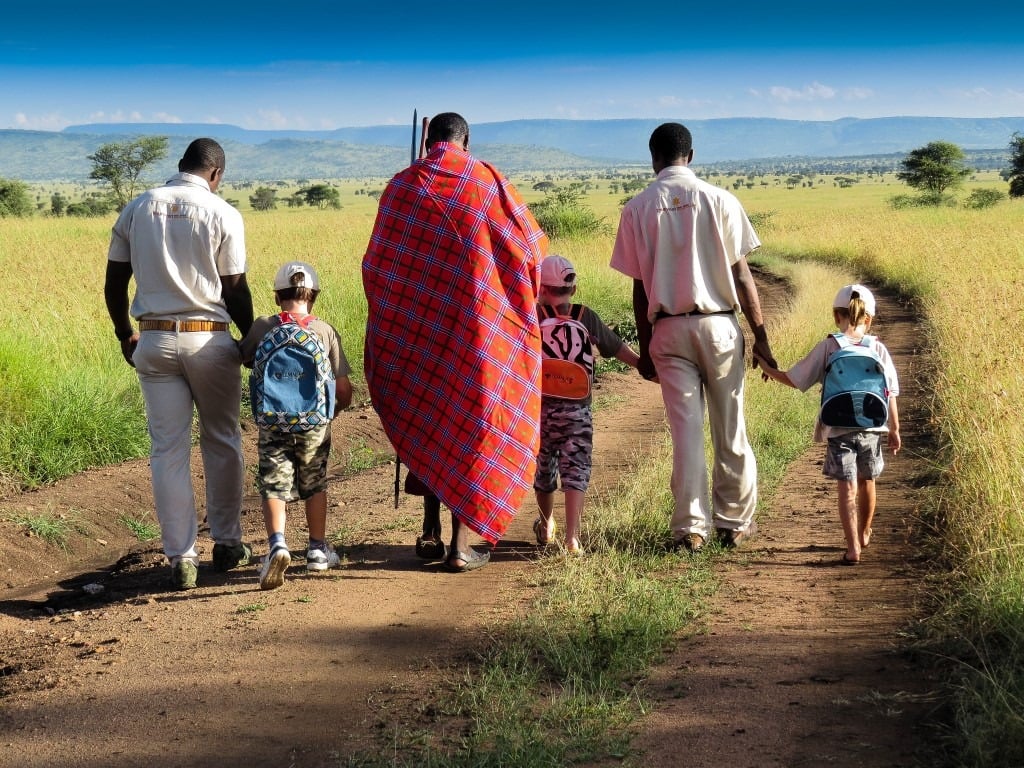
Walks typically last two to four hours, usually in the early morning when temperatures are cool and animals are active . You’ll walk in single file, led by an experienced guide and accompanied by an armed national park ranger. Group sizes are small typically capped at six guests or fewer.
Where to Go: Tanzania’s Best Walking Safari Destinations
The Southern Circuit: Where Walking Was Born
Walking safaris are most established in Tanzania’s southern parks. If walking is your priority, this is where you should focus.
1. Ruaha National Park is Tanzania’s largest park and one of its best-kept secrets. Remote and rugged, it’s home to impressive predator concentrations lion, leopard, and wild dog. Walking here means traversing dry riverbeds, rocky kopjes, and baobab-studded hills . The park’s isolation means sightings are often exclusive, and the feeling of wilderness is profound.
2. Nyerere National Park (formerly part of the Selous Game Reserve) is a UNESCO World Heritage Site. Its landscapes of riverine forests, sprawling plains, and palm-fringed lakes are ideal for walking safaris. The Rufiji River, with its network of channels and oxbow lakes, adds a water-rich dynamic to the experience .
3. Tarangire National Park: Elephants on Foot
Tarangire has one of the highest densities of elephants in Tanzania, and walking safaris here offer the chance to encounter them at close range on foot. The guides are experienced in reading animal behaviour, which is critical when approaching big game. Camps like Oliver’s Camp and Kuro Tarangire offer morning walks following elephant paths, exploring areas thick with baobab trees. Guides take time to point out smaller details plants, tracks, and birdlife that you would miss from a vehicle.
4. The Serengeti: Walking in the Iconic Park
Here’s something many travellers don’t realize: walking safaris are not available inside the Serengeti National Park boundary itself. Instead, they operate in private concessions bordering the park, Grumeti Reserve, Ikoma Wildlife Management Area, and Loliondo.
This distinction matters. Private concessions operate under lease arrangements that allow activities like walking and night driving that are not available inside the national park. If you specifically want a walking safari in the Serengeti area, you need to book a camp within one of these concessions, not a standard in-park lodge.
The experience here focuses on tracking, birdlife, and plant knowledge rather than close predator encounters. Walks typically run two to three hours in the early morning.
5. Arusha National Park: The Accessible Option
Arusha National Park is often described as the only park in Tanzania where walking safaris are freely allowed within the park boundary. It’s also unique for its diverse ecosystems from the slopes of Mount Meru to the flamingo-filled Momella Lakes. Walking here is accessible and can be arranged with relative ease, making it a good option for travellers who want to experience a walking safari without committing to the southern circuit.
6. Ngorongoro Conservation Area
Walking safaris operate in the Ngorongoro Conservation Area, including the Ndutu region. The scenery is dazzling lakes, volcanoes, and authentic cultural interactions . The wildlife density is lower than the Serengeti, but the walking experience is scenically rewarding.
What to Expect: The Nuts and Bolts
1. The Safety Briefing
Every walk begins with a mandatory safety briefing. You’ll learn how to behave around wildlife: stay in single file, avoid loud conversation, follow the guide’s directions immediately if animals are encountered at closer range than planned.
The armed ranger accompanying you is not there to make you feel like you’re on a military patrol he’s there for genuine safety. His presence allows you to walk in areas where buffalo, elephant, and even lions may be present.
2. The Walk Itself
Most walks cover approximately 10 kilometres per day on multi-day treks, though day walks are shorter. The terrain can be uneven and rocky, so sturdy, broken-in boots are essential. You’ll move slowly. Your guide will stop frequently to point out tracks, identify plants with medicinal uses, explain the behaviour of the animals you’re tracking, and interpret the signs of the bush.
3. Wildlife Encounters
Here’s the honest truth: you won’t always see big animals on a walking safari. And that’s okay. The experience isn’t about ticking off species it’s about learning to read the land. That said, encounters do happen. You might spot giraffes from a distance, or come across buffalo in thick brush which is when your guide’s skill really matters. One traveller recounts having to “backtrack quickly when a bull elephant didn’t like us being near a dry riverbed”. That unpredictability is part of the thrill.
4. Multi-Day Walking Safaris and Fly-Camping
For the truly adventurous, multi-day walking safaris with fly-camping offer the deepest immersion. Camps move daily, and you walk between locations. The Wayo Walking Camp in northern Tanzania, for example, offers treks of 3 to 14 days, with the route decided only one to two weeks before departure to ensure the best game locations.
These lightweight camps have access to regions where you can go for days without seeing a vehicle. It’s “Africa in the wild simple, rustic, and a return to nature like never before” .
The Best Time for a Walking Safari
The dry season, from June to October, is universally recommended. Grass is shorter, footing is firmer, and visibility is better. Animals concentrate around water sources, making sightings more likely.
January and February offer a secondary window with good wildlife density and lush post-rain scenery. The long rains from March to May are possible but require waterproof footwear and flexible scheduling.
If you’re combining a walking safari with the Great Migration, the dry season window overlaps with the northern Serengeti’s Mara River crossings.
Costs: What You’ll Pay
Walking safari costs vary significantly depending on location, duration, and whether you’re in a national park or private conservancy.
| Location | Cost Range (Per Person) |
|---|---|
| Tarangire National Park | $100–$300 |
| Ngorongoro Crater | $150–$450 |
| Serengeti Private Areas | $250–$600/day |
| Private Conservancies | $300–$800/day |
| Budget Day Walks | $40–$80 |
Sources:
Important budgeting note: Always confirm whether the quoted price includes the TANAPA activity permit fee ($23.60 per person), the armed ranger fee ($23.60), and 18% VAT. Some operators list base prices that exclude one or more of these components, which can add $50 or more per person per walk to the final bill.
Tips for guides and rangers are customary at $10 to $20 per day per guide.
Practical Tips for Your Walking Safari
What to Pack:
Sturdy, waterproof hiking boots, well broken in
Neutral-coloured clothing (avoid bright colors)
Plenty of water
Sun protection (hat, sunscreen)
Insect repellent
A good daypack
What to Know:
Age limits typically range from 12 to 16 years old for walking safaris, depending on the operator
Walks are weather-dependent and may be delayed, rerouted, or cancelled if conditions are unsafe
Tell your operator about any mobility concerns or previous injuries
Confirm the exact location of your proposed walk is it inside a national park or a private concession? The difference is considerable
Fitness: Walking safaris are not strenuous in terms of speed, but the terrain can be uneven and the heat can be intense. A reasonable level of fitness is recommended.
Is a Walking Safari Right for You?
A walking safari is not for everyone. If your priority is ticking off the Big Five as quickly as possible, stick to game drives. But if you want to understand the bush to learn how to read tracks, to identify birds by their calls, to feel the rhythm of the wild beneath your feet then a walking safari will transform your safari experience.
As one guide puts it, after a couple of days, guests “often enter an almost meditative state, as the impact of this true wilderness experience is taken in”.
It’s slower. It’s quieter. And it might just be the most memorable part of your Tanzanian adventure.
Ready to Walk?
Walking safaris sell out months in advance, especially in the peak dry season. Spaces are strictly limited, and the best camps in Ruaha, Nyerere, and Tarangire book up early.
If walking is a priority for your Tanzania safari, plan ahead, book with a licensed operator, and prepare for an experience that will change how you see the African bush one step at a time.
Keywords: walking safari Tanzania, Tanzania walking safari, Serengeti walking safari, Ruaha walking safari, Nyerere walking safari, Tarangire walking safari, Arusha National Park walking, guided walking safari, Tanzania safari on foot, African bush walks