
LAKE MANYARA NATIONAL PARK
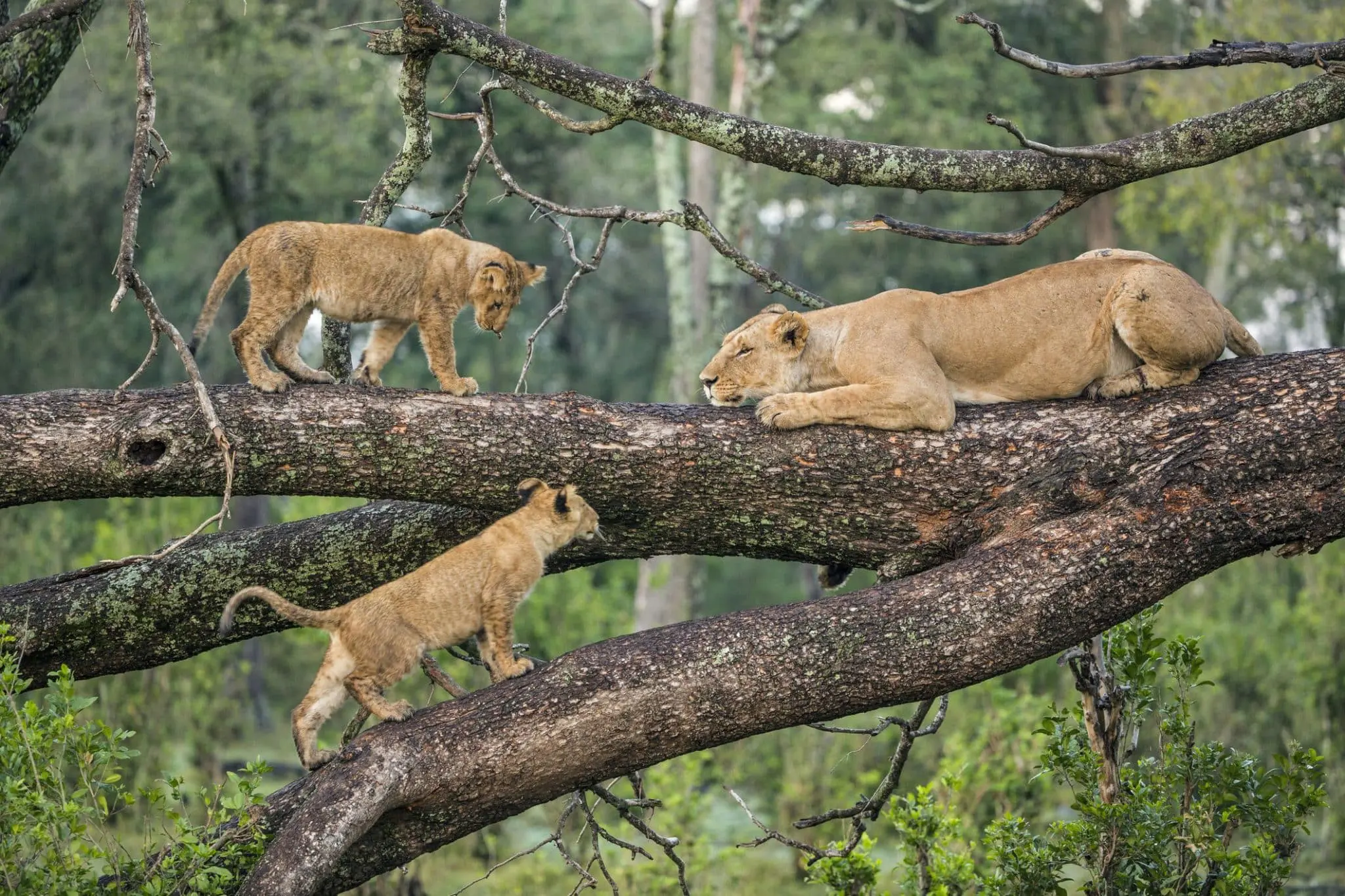
The Tree House Of Lions
Destination Type: Wildlife Safari , Birdwatching , Scenic Landscapes
Location: Northern Tanzania, 126 km (78 miles) west of Arusha
Famous For: Tree-climbing lions, thousands of flamingos, lush groundwater forest, stunning Rift Valley escarpment backdrop
Why the Name "Lake Manyara"?
The park takes its name from Lake Manyara, the shallow alkaline lake that dominates the landscape. The word “Manyara” is derived from the Maasai word “Emanyara,” which refers to the Euphorbia tirucalli plant – a type of spurge that the Maasai use for livestock enclosures. Over time, the name became associated with the lake and the surrounding area.
Ernest Hemingway once described Lake Manyara as “the loveliest I had seen in Africa” – a sentiment echoed by every traveler who stands on the escarpment overlooking this shimmering, bird-filled oasis.
Where is it Located?
Lake Manyara National Park is located in northern Tanzania, approximately 126 kilometers (78 miles) west of Arusha, on the road to the Ngorongoro Crater and Serengeti National Park.
Nearest City: Arusha (approx. 2.5 hours drive)
Nearby Parks: Tarangire National Park (40 minutes), Ngorongoro Crater (1.5 hours)
Access Gates: Lake Manyara Gate (main entrance)
Airstrip: Lake Manyara Airstrip (LKY) – connects to Arusha, Serengeti, and Zanzibar
The park is situated at the base of the Great Rift Valley escarpment, a dramatic cliff wall that rises nearly 600 meters (2,000 feet) above the lake. This location creates one of the most photographed backdrops in all of Tanzania.
Geography & Landscape: Three Worlds in One Park
Lake Manyara National Park is compact but incredibly diverse. In fact, two-thirds of the park’s 330 square kilometers (127 square miles) is covered by the lake itself, leaving approximately 110 square kilometers (42 square miles) of land for wildlife viewing.
Despite its small size, the park contains three distinct ecosystems that change dramatically as you drive:
1. The Groundwater Forest (Entrance Zone)
Immediately after entering the gate, you are not greeted by savannah but by a lush, tropical jungle. This groundwater forest is fed by underground springs from the Rift Valley escarpment, creating a permanent, verdant oasis. Towering mahogany trees, giant fig trees (with roots that engulf rocks), sausage trees (with their distinctive hanging fruits), and wild mango trees create a canopy that blocks the sun. The air is cool, damp, and filled with the calls of blue monkeys, vervet monkeys, and hornbills.
2. The Floodplain & Acacia Woodlands
As you drive further, the forest opens into grassy floodplains dotted with acacia trees. This is where the legendary tree-climbing lions make their homes. The open landscape allows for excellent wildlife viewing, with zebra, wildebeest, giraffe, and buffalo grazing against the backdrop of the Rift Valley escarpment.
3. The Soda Lake (Lake Manyara)
The lake itself is shallow (only a few feet deep) and alkaline (soda lake) , which supports a unique ecosystem. When water levels are right, the lake turns pink with thousands of flamingos – both lesser and greater flamingos – creating one of East Africa’s most stunning visual spectacles. Pelicans, storks, and hundreds of other water birds also gather here.
Tourist Attractions & Wildlife
Tree-Climbing Lions – The Park’s Signature Attraction
This is what makes Lake Manyara famous worldwide. For reasons that are still debated, the lions of Lake Manyara have developed a unique behavior: they climb acacia trees and lounge on the branches during the heat of the day.
Why do they climb? Theories include:
Escaping the heat (cooler in the tree canopy)
Avoiding insect bites (tsetse flies and other pests are less abundant in trees)
Getting a better vantage point to spot prey
What makes Manyara’s lions special? It is not that lions elsewhere never climb trees – it is that in Manyara, they do it regularly and predictably. Spotting a pride of lions draped over the branches of an acacia tree, tails dangling lazily, is a safari bucket-list moment. Tree-climbing lions are also found in Tarangire and a few other locations, but Lake Manyara is the most famous and reliable spot.
The Flamingos of Lake Manyara
When conditions are right (typically the dry season, June-October), the alkaline lake becomes a feeding ground for thousands of lesser and greater flamingos. The birds filter algae and tiny crustaceans from the shallow water, and when they take flight together, the entire sky turns pink.
Note on flamingos: The lake’s water levels fluctuate significantly. In very wet years, the water may be too deep for flamingos to feed effectively. In very dry years, the lake may shrink, concentrating the birds. Your tour operator will have current updates.
The Baboon Troops (World’s Largest Concentration)
Lake Manyara is famous for its large troops of olive baboons. Some estimates suggest this is one of the densest baboon populations in Africa. Watching the complex social dynamics – mothers grooming infants, juveniles tumbling in play, alpha males asserting dominance – is endlessly entertaining. The baboons often walk right alongside the vehicles, completely habituated to human presence.
Other Wildlife
While Lake Manyara does not have the full Big Five (no rhinos), you can see four of the five:
Elephants: Often seen wading through the forest or crossing the floodplain
Buffalo: Large herds graze on the grasslands
Leopards: Elusive but present (best spotted in the forest)
Lions: Including the famous tree-climbers
Other mammals:
Giraffes (Masai giraffe, elegantly gliding across the plains)
Hippos (in the lake and pools, often seen yawning)
Zebras, wildebeest, impala, waterbuck, bushbuck
Blue monkeys and vervet monkeys (in the groundwater forest)
Rare sightings: aardvark, civet, pangolin (very shy, nocturnal)
Over 400 Bird Species – A Birder’s Paradise
Lake Manyara is one of the best birdwatching destinations in northern Tanzania, with over 400 recorded species.
Iconic birds:
Flamingos (lesser and greater) – the pink spectacle
Pelicans (great white and pink-backed)
Yellow-billed storks, African spoonbills, sacred ibis
Fish eagles, bateleurs, tawny eagles
Kingfishers (malachite, pied, giant)
Hornbills (silvery-cheeked, crowned)
Lilac-breasted roller, grey-headed kingfisher, bee-eaters
The groundwater forest is particularly rich in birdlife, with species that are difficult to see elsewhere in Tanzania.
The Treetop Walkway – Tanzania’s First “Airwalk”
Lake Manyara offers a unique activity: a treetop walkway (suspension bridge) that takes you 18 meters (60 feet) up into the forest canopy. This “airwalk” allows you to walk eye-to-eye with monkeys and birds, offering a completely different perspective on the ecosystem. It is a thrilling experience and particularly popular with families.
Best Times to Visit
Dry Season (June – October) – Best for Wildlife Viewing
The Vibe: Peak season. The park is drier, animals concentrate near water sources.
Wildlife: Excellent for tree-climbing lions (they lounge in trees to escape heat). Elephant and buffalo sightings are reliable. Flamingos are usually present (water levels permitting).
Weather: Sunny, dry, cool mornings. The Rift Valley escarpment provides some shade in the forest.
Best chance to see the famous lions, good flamingo numbers, clear skies
Green Season (November – May) – Best for Birding & Lush Scenery
The Vibe: Secret season. The park transforms into an emerald paradise. Fewer tourists.
Wildlife: Birding is at its peak (migratory birds present). Resident game is still visible, but more dispersed.
Weather: Afternoon showers, warm, lush vegetation.
Stunning green landscapes, excellent birdwatching, lower rates, no crowds
Accommodation & Lodges
Inside/Adjacent to the Park
Lake Manyara Serena Safari Lodge: Perched on the edge of the escarpment with stunning views over the lake. Infinity pool, classic safari lodge style. Luxury.
Manyara Ranch Safari Lodge: Located just outside the park, offering a classic tented camp experience. Good mid-range option.
Lake Manyara Kilimamoja Lodge: A newer luxury lodge with panoramic views. Great for couples.
Mto wa Mbu Area (Gateway Village)
Mto wa Mbu is the town located at the park entrance. It offers a range of budget and mid-range accommodations:
Migunga Forest Camp: Tented camp set in a forest. Mid-range, good value.
Africa Safari Lake Manyara: Budget-friendly lodge with basic rooms and camping.
Twiga Lodge & Campsite: Simple accommodations and a popular campsite.
Special Note: Maramboi Tented Lodge
Located on a private concession between Lake Manyara and Tarangire, Maramboi offers night game drives and walking safaris (not allowed inside Manyara National Park itself). However, as of 2025, Maramboi is closed for renovations until January 1, 2026 due to rising lake levels. Check availability for 2026 travel.
What you Should Know
Park Fees
International Adult: Approximately $60-80 USD per 24 hours (varies by season)
Children (5-15): Approximately $20-25 USD per day
Vehicle Fee: Small fee per vehicle (usually included in tour operator costs)
Getting There: By Road
From Arusha: 2.5 hours (126 km / 78 miles) on paved road
From Tarangire National Park: 40 minutes
From Ngorongoro Crater: 1.5 hours
From Serengeti: 4-6 hours (long day drive)
By Air:
Lake Manyara Airstrip (LKY) – charter flights from Arusha (ARK) and Kilimanjaro (JRO) land here. Your lodge will arrange pickup.
Frequently Asked Questions
Q: Is Lake Manyara worth visiting if I am already going to the Serengeti and Ngorongoro?
A: Yes, as a half-day or one-day add-on. Manyara is small and can be seen in a few hours. It does not compete with the Serengeti for wildlife density, but its unique groundwater forest, tree-climbing lions, and stunning Rift Valley views make it a worthwhile stop on the way to Ngorongoro.
Q: Are the tree-climbing lions guaranteed?
A: No. They are wild animals. However, Manyara is the best place in Africa to see this behavior. Your chances are highest during the dry season (June-October) when the lions climb trees to escape the heat.
Q: How long do I need in Lake Manyara?
A: One day (half-day to full day) is sufficient. Most visitors combine a morning game drive at Manyara with an afternoon drive to Ngorongoro or Tarangire. You do not need multiple days here.
Q: Can I see the Big Five at Lake Manyara?
A: No rhinos. You can see lion, elephant, buffalo, and (with luck) leopard. For rhinos, visit Ngorongoro Crater.
Q: Is Lake Manyara good for families?
A: Yes, very family-friendly. The park is small, drive times are short, and the treetop walkway is exciting for children. The baboons and monkeys are also endlessly entertaining for kids.
Q: What is the Mto wa Mbu village tour?
A: A popular cultural add-on. Mto wa Mbu (“Mosquito River”) is a vibrant village known for its diverse population (over 120 ethnic groups). Tours include visits to rice paddies, banana plantations, wood carving workshops, and local markets. A good way to experience Tanzanian village life.