
Tanzania Safari Packing List – Everything You Need to Pack For a Tanzania Safari
For an unforgettable adventure on a Tanzania safari, you need to pack right and carefully. The country’s varied weather conditions and weight restrictions create the need for a meticulous Tanzania safari packing list. From essential clothing and accessories to crucial travel documents and portable chargers, every item plays an important role in ensuring a perfect safari experience.
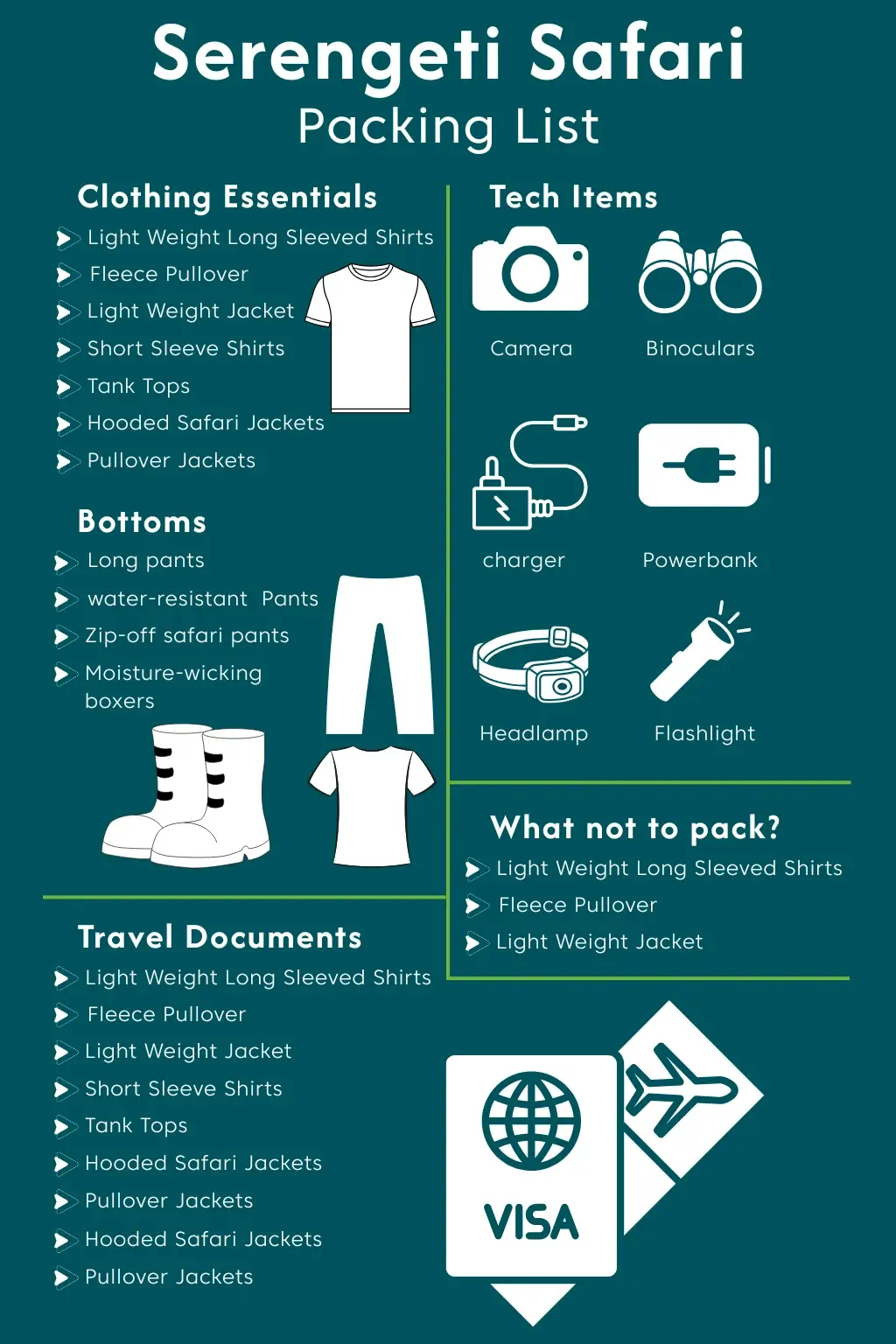
For Entry into Tanzania
Passport
Every traveler must have a valid passport with at least six months of validity from the date of entry. Additionally Tanzania requires that there should be a minimum of one blank page in your passport for a visa stamp upon arrival.
Visa
Most traveler visiting Tanzania require a visa for entry. You can determine your eligibility for the visa and apply for an e-visa by visiting the official website – https://visa.immigration.go.tz/. The standard cost for a visa is US$ 50 and processing time is around 2 weeks.
Travel Insurance
A travel insurance is not a requirement to enter Tanzania, but it I must have especially when going on safari. It provides peace of mind, covering unforeseen circumstances such as health emergencies, accidents, and loss of belongings.
Yellow Fever Vaccination
Travelers aged 1 year and older arriving from countries at risk for Yellow Fever Virus transmission must provide proof of yellow fever vaccination. This requirement also applies to layovers exceeding 12 hours in countries with a risk of yellow fever virus transmission. If you are considering a layover in Addis Ababa or another place with yellow fever risk, keep this in mind.
Travel Tip
Store your important paperwork securely in a waterproof and sealable bag to protect them from humidity and unexpected downpours. Also, it is a good idea to make scanned copies of essential documents and store them in a separate location from the originals. This ensures a backup in case of loss or theft. Everyday Essentials for a Tanzania Safari
Medicine
Malaria pills and up-to-date vaccines are important preventive measures to protect against potential health risks during the trip. Visit your doctor or a travel clinic a month or two before your trip to make sure you have everything you need. Don’t forget any other medications you may need. Daily medicines, anti-diarrhea/nausea. Paracetamol or ibuprofen, and oral rehydration salts.
Cash
You will likely have prepaid for your Tanzania safari with a credit card or a bank transfer, but don’t forget to carry cash to tip your safari guide. A general rule of thumb is around $10 USD per person, per day.
Insect Repellent
With the prevalence of mosquitoes in safaris areas, it is crucial to use effective mosquito repellent. Applying and reapplying repellent is vital in preventing diseases such as malaria and dengue fever.
Good Quality Binoculars
Binoculars are a must – have for a Tanzania safari, enhancing the wildlife viewing experience and allowing for close-up observation of distant animals. Investing in high – quality binoculars ensures clear and detailed views. Your guide will usually have a pair that you can borrow, but it is ideal for each person to have their own pair of binoculars.
Sunscreen
Protecting your skin from the scotching Tanzanian sun is crucial during your safari experiences. Applying sunscreen generously and frequently shields from potential sunburn and skin damage. Make sure to apply your inspect repellent about 10 minutes after applying the sunscreen. If you are taking doxycycline as an anti-malarial, be extra careful with the sun. These antibiotics can make your skin a lot more sensitive to the sun. Opt for at least 50 SPF to avoid sunburn.
Sunglasses
The bright and often glaring outdoor conditions in Tanzania make sunglasses a crucial accessory. Bring you polarized pair of more protection.
Hat
Wearing a hat, in addition to sunglasses will shield your face and skin from sunburn.
Toiletries
- Toothbrush & toothpaste
- Hand sanitizer or wet wipes
- Body wash, shampoo, and conditioner
- Lip balm with SPF
- Moisturizer and lotion
- Deodorant
- Hairbrush
- Soap and razor
- Feminine hygiene products
- Basic first aid kit
- Contact lenses/solution
What to Wear on a Tanzania Safari
While on a safari venturing into the natural habitats of Tanzania, the goal is to observe wildlife in their natural state without causing any disturbance. Opt for neutral, earthy tines like beige, army green, brown, or khaki, that help you to blend into the environment. Avoid wearing dark colors like blue and black. These colors attract tsetse flies and other insects.
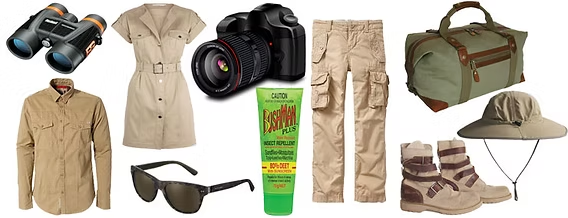
Linen or Long-sleeved shirts
Lightweight and breathable, linen shirts in earthy tones not only keep you cool but also blend the environment.
Cargo Pants – Green or Khaki
Cargo pants are the best practical and comfortable choice for what to wear while on a Tanzania safari. Their numerous pockets provide convenient storage for essentials, making it easier to keep everything organized while on the move. Additionally, their durable fabric makes them well-suited for the rugged terrain often
encountered during a Tanzania safari.
A light Jacket
While the days might be warm, the evenings and early mornings can bring about considerably lower temperatures, making a light jacket essential for comfort and well-being.
Boots
Sturdy boots are essential for trekking in the rugged terrain of Tanzania – if you are planning on doing a walking safari. They provide protection and stability, ensuring a safe and comfortable safari experience.
Sneakers
If you plan to stay in the safari vehicle most of the time, you can opt for sneakers instead.
Scarves
The dust in the Serengeti can be brutal, especially during dry season. Make sure to bring a scarf or two to cover your nose and mouth.
Rain Jacket
Even in the dry season, you may still see some rain. Bring a light jacket just in case.
Electronics
- Camera and memory cards. The diverse and stunning landscapes, along with the magnificent wildlife, create countless opportunities for incredible photography. Make sure to carry a high-quality camera with a powerful zoom lens (at east 200mm, but preferable more) to capture distant subjects effectively.
- Don’t forget your camera batteries, charger + extra SD Cards.
- Phone charger Most of the safari vehicles have outlets. Make sure to bring your USD charging cable.
- Universal adaptor Ensure you pack a universal adapter for Tanzanian outlets, as their plugs differ from those in many other countries. You can purchase a universal adapter at travel stores or online before your trip.
- Tripod: A tripod is extremely helpful for capturing the perfect shot. With the varying lighting conditions and diverse wildlife in Tanzania, a tripod provides the stability needed for stunning high-quality imagery.
- Power bank: While most safari vehicles are equipped with chargers, we recommend carrying a power bank with you to ensure your phones stay charged all the time. That way you will be I position to capture all the incredible moments on your safari.
Useful Packing Tips and Tricks
- Opt for versatile items – packing versatile clothing and gear that can be used for multiple purposes helps minimize the number of items you need to bring
- Roll your clothes – Rolling clothes instead of folding them not only saves space but also minimizes wrinkles, keeping your attire looking fresh.
- Use Packing Cubes – These nifty organizers keep your belongings neatly compartmentalized, making it easier to locate specific items without creating a mess. This is a life saver on safari.
- Consider lightweight and compact options: Look for travel-friendly version of essential items such as compact toiletry bottles and lightweight, quick dry clothing
- Plan for laundry: Pack a small amount of travel detergent in case you need to hand wash essentials during your safari to extend to usability of your clothing.