
A balloon safari in Tanzania is one of the most special experiences you will ever have on a safari in Africa, perfect for honeymooners, friends and family.
Take to the skies for a different perspective of the landscape that make up Tanzania, a balloon safari is a perfect addition on your Tanzania safari offering you a grand opportunity to see giant herds of animals and a spectacular sunrise over the wilderness .
Where to Do Balloon Safaris in Tanzania
Tanzania has a number of beautiful destinations where balloon safaris are offered.
- Serengeti National Park
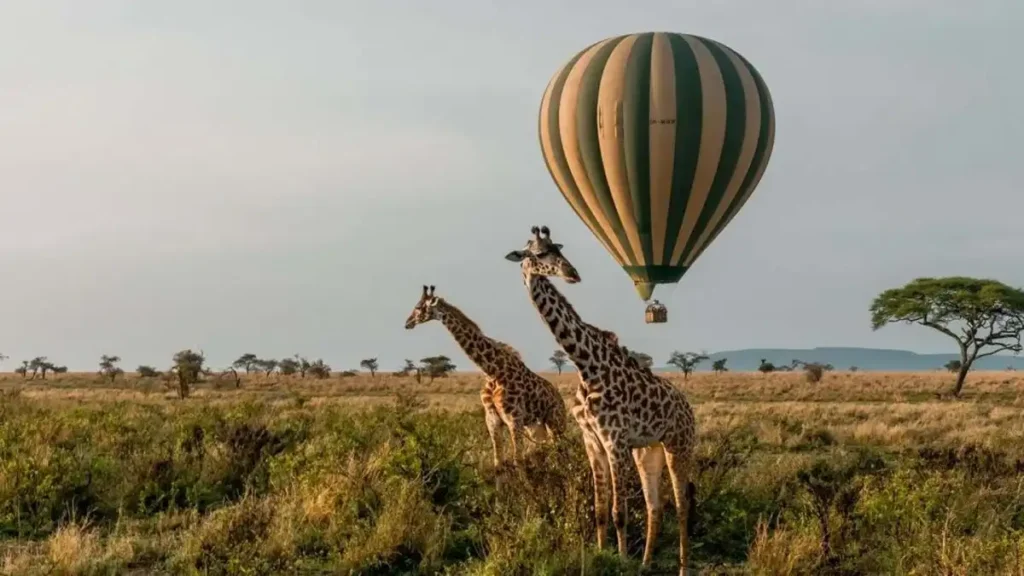
The Serengeti National Park named after a Maasai word meaning “endless plains” is one of the world’s most famous national parks, and from up in the sky you can truly appreciate the vastness and abundance of space. While on a Serengeti balloon safari, you may even see the awe-inspiring Great Migration with its massive herds of wildebeests and zebra doting the plains.
Ass you drift over this savannah landscape, keep an eye out for hippos in their pools, plentiful plains game and, predators on their morning hunt.
- Ruaha National Park
Balloon safaris in Ruaha National Park operate exclusively during the dry season months from June to October, this experience offers spectacular views of the Ruaha River and the landscape dotted with giant baobab trees.
Larger than the Serengeti National Park, the park’s elevated viewpoint helps you understand the sheer enormity of this unique destination. The predictable and gentle winds through the dry season allow for low-altitude flying just meters above the grunting hippo, as well as climbing to great heights to enjoy the vantage point of this land.
- Tarangire National Park
The scenic Tarangire National Park makes for an incredible destination for a hot air balloon safari. The soft winds offer a slow, almost lazy balloon safari, creating time to appreciate the landscape and wildlife below. The grassy pains, baobab trees, and rocky outcroppings, colored with the red soil of this region, carved through by the Tarangire River and the lush green of the Silale Swamp.
Watch the impressive herds of elephants and buffaloes, their grey and black hides glinting in the sunrise as they emerge from the swampy waters.
- Ngorongoro Conservation Area
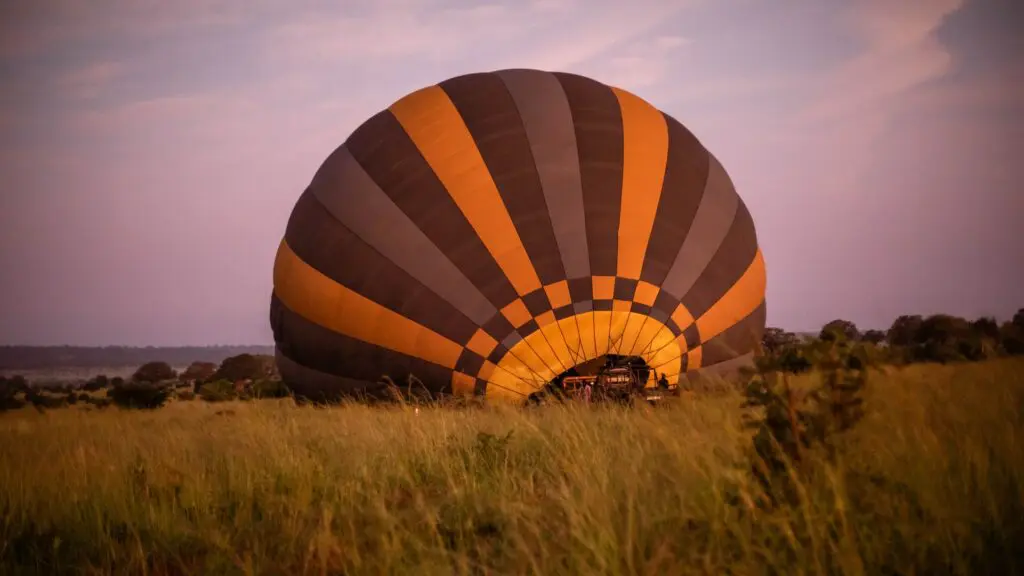
Balloon safaris in Ngorongoro Conservation Area are conducted in the Ndutu Plains. Imagine floating above one of Africa’s greatest wildlife sanctuaries as the sun rises, casting a golden glow over the prehistoric crater teeming with life.
Ngorongoro Conservation Area is a UNESCO World Heritage Site known for its incredible wildlife density, breathtaking scenery and unique geography.
A balloon safari in Ngorongoro Conservation Area offers a trip through the cradle of Mankind to the plains where the world – famous wildebeest begins.
How to Plan Balloon Safaris in Tanzania
Booking balloon safari in Tanzania is possible with us to Serengeti National Park, Tarangire National Park, Ngorongoro Crater and Ruaha National Park.
Talk to our expert travel experts who will simplify the process for you, as we handle the tricky part of organizing your transport, accommodation and arranging the balloon flight.
Timings for Balloon safaris
Rise at 4 am to arrive at the launch site around 5.15 am where the crew will set up the balloon. Having been briefed on the safety procedures by the captain, you can take off at 6.45 am.
After approximate one-hour flight, you will gently return to the ground. Following a champagne toast at 8:30 am, you will be taken to enjoy a bush breakfast under the shade of a giant acacia tree.
Clothing
Mornings in Tanzania start off very cold but warm up quickly, so a warm layer that can remove later is essential. Trousers, long-sleeved shirts, and a hat to protect from the radiant heat from the burners are important.
Passengers can bring a small bag onto the flight, which is perfect for storing camera, binoculars and sunscreen cream.
Scared of heights?
Many passengers who are scared of heights confess to not having sensed the fear of vertigo because the huge wicker basket provides a sense of safety.
What is more, the basket moves in sync with the balloon. Consequently, it does not sway, and passengers rarely experience motion sickness.
Is a balloon safari in Tanzania Safe?
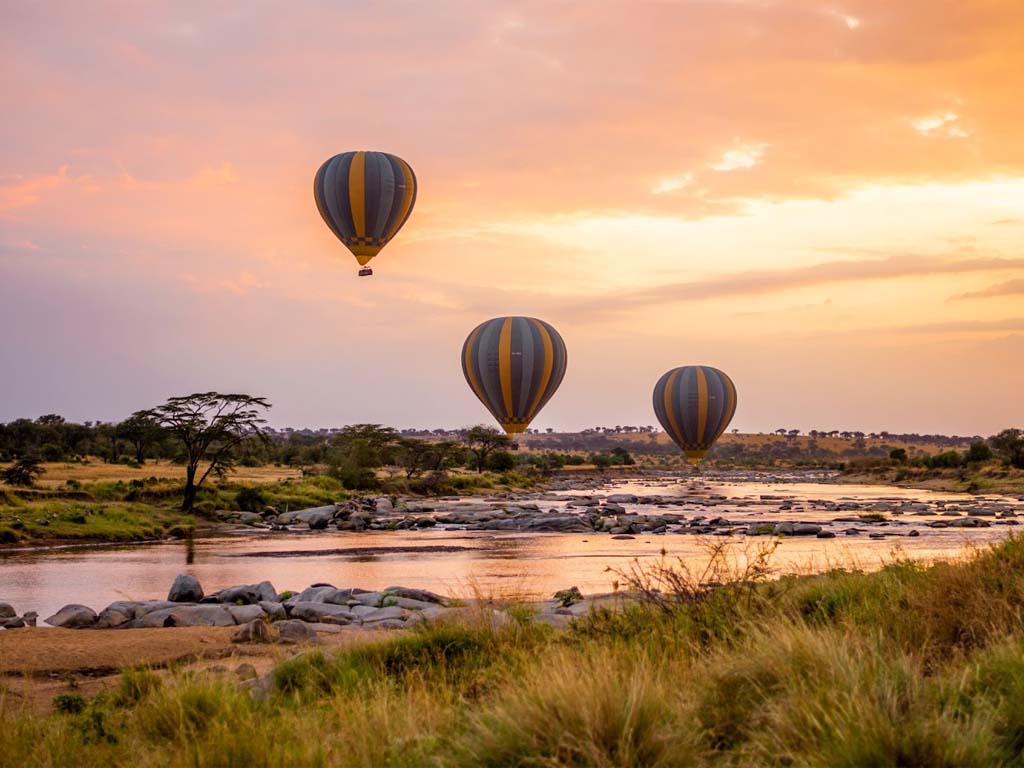
With experienced pilots carefully assessing weather forecasts to decide if it is safe to fly. Luckily, the weather in Tanzania is relatively consistent, making it possible to fly almost all year round in Tanzania.
The balloon equipment used is of the best quality and is kept in the best condition. As a result, the balloons are retired after only 850 hours of flight to ensure all the equipment is in perfect working order. The wicker baskets have individual compartments that hold 2 to 4 people, plus a seat, safety belt and a rope around the inside edge to give you something secure to hold onto.
Before taking – off, the pilot will run through all the safety instructions so that you know what to do and expect during the flight. Then you will journey over the landscape to return gently to the ground on hour later.
Can Children Join a balloon safari?
Children from seven years can take part in balloon safaris in Tanzania. However, if your child is six years old. 1.4cm tall, understands English and listens to instructions, it is possible for them to use a special cushion and seatbelt can also join the balloon safari.
If the children are under six years of age, they can be looked after by a dedicated chaperone on the ground who will accompany them in a vehicle to where you will touch down, so that they can watch you arrive and then enjoy the bush breakfast with you.
When to Go on Balloon Safaris in Tanzania
For balloon safaris, clear skies and light steady winds are needed. Luckily, this type of weather is prevalent in the morning in Tanzania all year round. As the balloon take to the air, it is possible to journey through the sky above the savannah plains when vehicles get stuck in the mud. This makes the balloon flight enjoyable and possible all year round.
Tanzania has a tropical climate with two dry seasons and two rainy seasons.
During the dry season, wildlife congregates around water sources while during the wet season, the green landscapes, dramatic weather and light can be experienced.
Dry Season
June to October is the most popular time to take safari in Tanzania. The weather is dry and pleasant with a minimal chance of rain. Throughout Tanzania, it is the best time to see the wildlife as the vegetation is lower and the wildlife does not stray too far from water sources.
In the Serengeti and Ngorongoro region, you can see the savannahs from above, while in Ruaha National Park and Tarangire National Park, you can see huge herds of buffaloes and elephants.
The second shorter dry period from January to February is a great time for spotting animals.
Wet Season
From March to May is the main rainy season in Tanzania, usually it rains heavily on a daily basis. Luckily, it tends to rain in the afternoons, evenings or during the night in dramatic thunderstorms. The mornings tend to be rain-free, and early morning balloon safaris are rarely affected.
November to December is a short rainy season in Tanzania, the short rains are less predictable and usually have short afternoon thunderstorms.
Both rainy seasons turn the landscapes green, whilst cloud formations are beautiful, and the light tends to be risp and golden. This is a beautiful time to see Africa’s wilderness from above.