
Wildebeest Migration In Masai Mara
Every year around July to August, over 2 million wildebeests together with thousands of zebras and gazelles cross from the plains of Serengeti northwards into Masai Mara in their annual search for water and green pasture guided by an instinct of survival.
The Wildebeest Migration is one of the most spectacular and thrilling display of wildlife behavior in the world, taking place in the Serengeti – Mara; one of the oldest ecosystems in the world.
To witness the Wildebeest Migration In Masai Mara, we recommend planning your Wildebeest Migration safari from mid-July as this is when the migration typically arrives in Masai Mara with the larger herds starting to move into the reserve, the herds stay till the end of August before declining into mid-September.
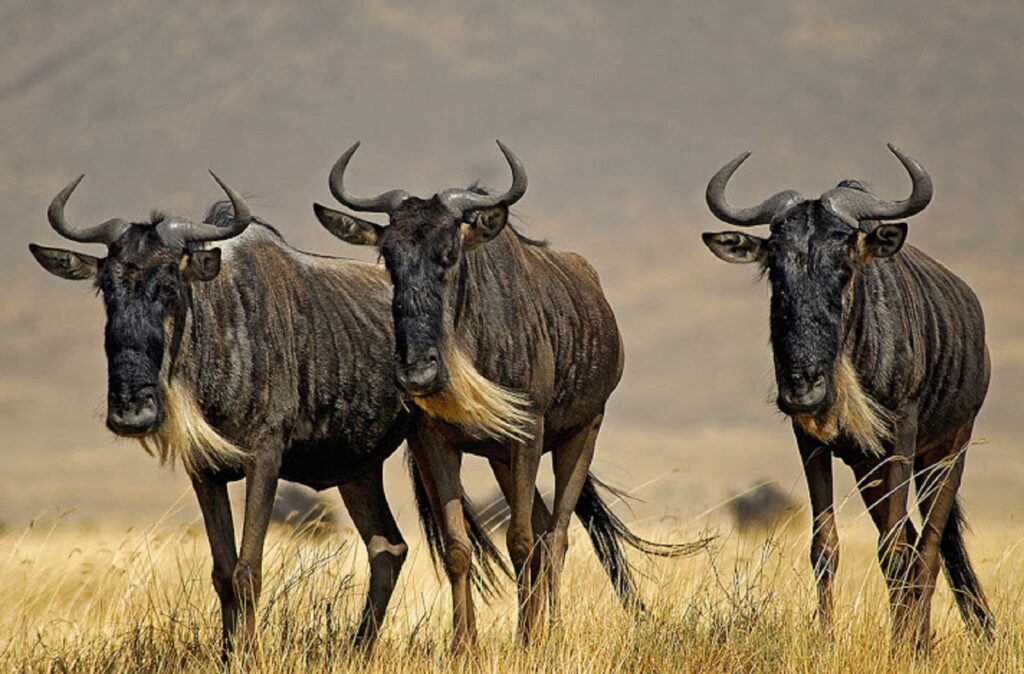
Each year, the number of wildebeests take part in the annual migration vary. However, in the past migrations over 1 million wildebeests and close to a million zebras and Thomson gazelles and Grant’s gazelles take part in this long trek that lasts a number of weeks. Their journey is filled with danger as the herds faceoff with the fierce crocodiles in the Mara and Talek rivers along the way, during which many lose their lives to the giant Nile Crocodiles lying in wait for their prey.
In this blog we provide information about wildebeest migration in Masai Mara as well as answering the frequently asked questions by travelers.
When is the best time of year to witness the Wildebeest Migration in Masai Mara?
The Wildebeest Migration in Masai Mara typically starts in July and ends in late September. However, the exact dates around this period are not predictable until the first large wildebeest actually gather at the northern edge of Serengeti as they near the Mara River.
These initial herds are sometimes known to gather at a spot for days on end without crossing over to the Mara, so when exactly the final leg of the movement starts is difficult to predict.
So What is The Best Time to see the Wildebeest Migration in Masai Mara? In Masai Mara, the wildebeest migration typically starts in July and ends in late September. However, the exact dates around this period are not predictable until the first large wildebeest actually gather at the northern edge of Serengeti as they near the Mara River.
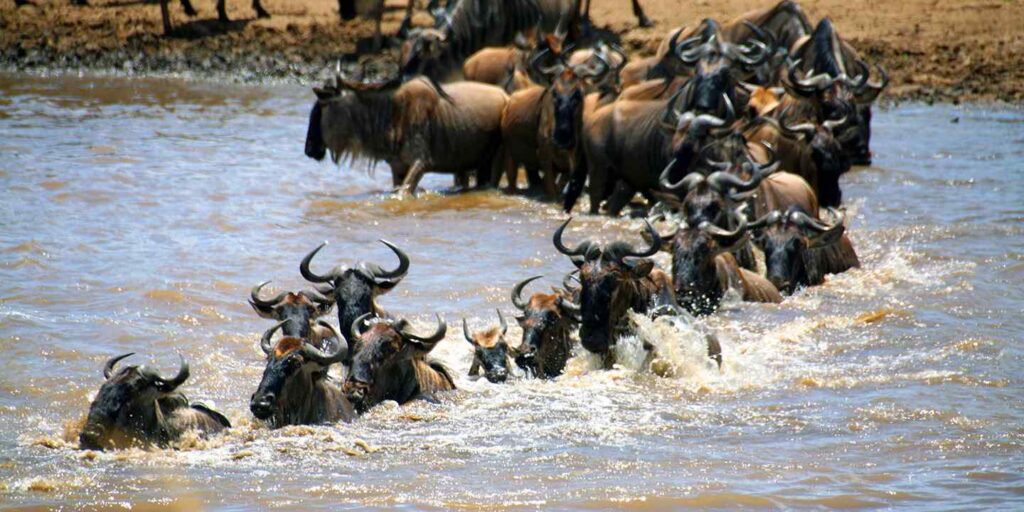
These initial herds are sometimes known to gather at a spot for days on end without crossing over to the Mara, so when exactly the final leg of the movement starts is hard to predict.
So What is the best time to see the Migration?
Based on the experience from decades, mid-July to late August is the best time to see the migration, keep in mind it is a gradual event that takes place over several weeks at different locations along the Serengeti Masai Mara Border.
In summary, the best time to see the migration is August.
Where do the wildebeest migrate to and from?
The movement of wildebeests is from Serengeti National Park into Masai Mara National Reserve, the movement is dedicated by a number of factors such as the climate, pasture and mating and calving season.
Note: The Wildebeest Migration throughout the year in a generally clockwise direction covering vast areas reaching into Southern, Central and Western Serengeti before the year long trek brings then to the Masai Mara around July to August. Their journey back to the Serengeti happens around late October though it is less spectacular and more like a slow dispersal.
How do you see the Wildebeest Migration?
Wildebeest Migration in Masai Mara can be seen during game viewing (game drive) in the savannah plains, conducted by specialized vehicles driven by experience driver-guides. There are several core points where the wildebeests cross the river, it may be necessary to access and station at these points during a day – long outing in the reserve as some of the lodges and cams are in a drive of an hour from the ideal vantage points. Most tourists who visit Masai Mara National Park specific to see the Mara River Crossing, it is important to spend enough time at these crossing points which also tends to vary slightly every year while staying within a generally similar sub-locality of the reserve.
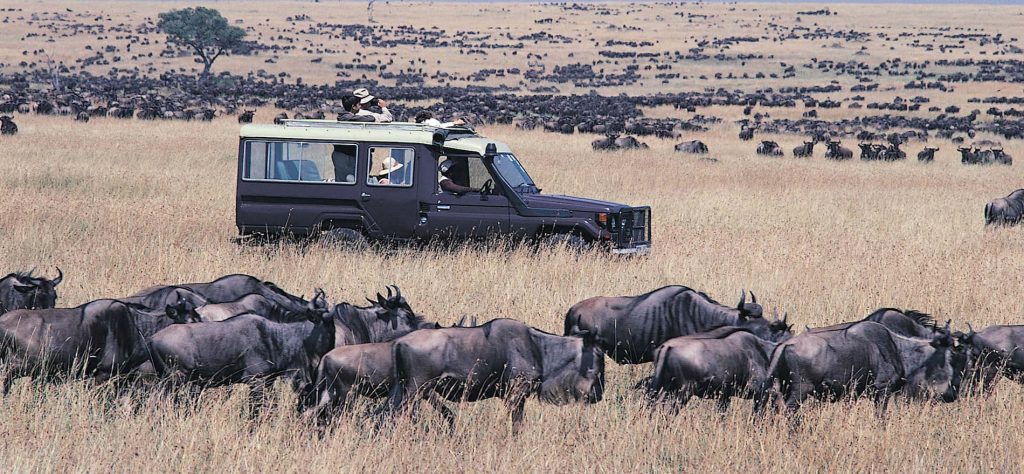
Month By Month to Witnessing Wildebeest Migration in Masai Mara
To most safari goers, the Wildebeest Migration only happens once a year but the migration is in fact an all year round phenomenon event offering different unique and exciting wildlife experience at various times of the year. The Mara River Crossing is one of the most requested event of the migration and usually coincide with the peak safari season, therefore the assumption that this is the only time of the year that the wildebeests are on the move or can be seen.
The Mara River Crossing usually occurs at Mara River around ate July to August with parts of September and again on their return south around the last two weeks of October through early November thus the best time to see the annual wildebeest migration in Masai Mara.
Below is a breakdown of where the herds are during the year.
Travel Tip: Keep in mind that it is difficult to predict the movement of the herds as it is prompted by rain which can be early, late or on time.
December to April
Dependent on rains, the herds can be seen south of the Serengeti National Park between Ndutu Plains and Ngorongoro Plains. The best place to be during this month is the far south of Serengeti.
Around February, it is the calving season and there are high chances of witnessing the calving season with millions of baby calves being born. The herds move swiftly in search of green grasslands to provide sustenance for the arrival of their young, the predator interaction such as lions ad leopards are moving to their region to prey on the young and vulnerable calves.
End of March and Early April, the herds move slowly and predictably to begin their northward journey and many have left already and are in the center and even western Serengeti.
May to June
During this time of year, the herds all seem to be moving north in search of fresh grazing and water. Usually in huge columns of up to 40 kilometers in length, the herds are seen reaching the central and western Serengeti.
June marks the end of rainy season, traditionally this is the end of the rainy season and the Grumeti River Crossing period but this mainly depends on the water level of the Grumeti River.
Note: The Grumeti River Crossing is not quite as spectacular as the Mara River Crossing.
July to September
This is when the big event occur “The Mara River Crossing”, the herds have reached the western Serengeti and Grumeti Reserve and peering closely at the brown waters of Mara River they have to cross. In August, the survivors of the crossing continue to move northward into the northern Serengeti and begin crossing into Kenya’s Masai Mara National Reserve.
While in the Northern Serengeti, the herd breaks into smaller groups and the rest of the wildebeests will have cross the Mara River and the majority of herds will be in the Great Masai Mara Area feasting on the lush green grass before venturing north towards the private conservancies of Mara North and Olare Orok.
This is usually the most preferred moments of the migration, watching the frantic herds of wildebeests crossing the Mara River.
October to November
The wildebeests migrate again with more accord, heading south through western Loliondo and the Serengeti National Park’s Lobo Area returning to the green pastures. The herds can now be seen in Kogatende and Lamai (Northern Serengeti). In a normal year, the short rains have begun in November, the herds now are in the Serengeti stationed with the Lobo, Mbuzi Mawe, and Seronera Valley areas where water is abundant.
Fresh grazing sees the wildebeests clustered in the north – eastern Serengeti particularly around Lobo Area as well as the South Serengeti.
The calving begins again, and the predators move again and the cycle of life begins all again.
In conclusion: With the above information, hope you are now fully informed about the Wildebeest Migration in Masai Mara and ready to start planning your Wildebeest Migration Safari.