
Tanzania Destinations
Tanzania is one of the most incredible safari destinations in Africa featuring unforgettable natural attractions and home to over 120 tribes with fascinating traditions, cultures and over 120 different languages. The country’s different landscapes include mountains (including Mount Kilimanjaro – Africa’s highest mountain), endless savannah plains, deep craters and gorges, Miombo woodlands, arid flatlands, forests and white sandy beaches.
Tanzania has more than twenty national parks and game reserves open for visitors from all over the year, these protected areas are a true nature lover’s paradise hosting abundant wildlife and bird species.
Tanzania Safari Destinations
Tanzania safari destinations are found in different regions as explained below.
The Northern Circuit – Is home to classic safari destinations like Tarangire National Park, Serengeti National Park and Ngorongoro Conservation Area “Ngorongoro Crater” where you will see the Big 5, beautiful landscapes, and abundant wildlife. In this Tanzania safari region you will discover The Wildebeest Migration and two UNESCO World Heritage Sites.
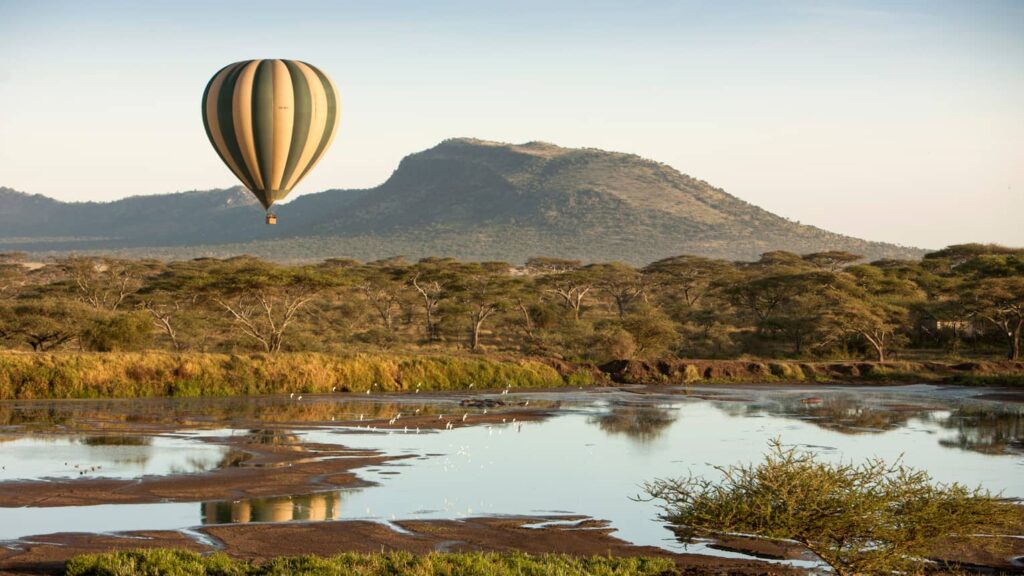
The Southern Circuit – Is a perfect region for nature lovers. The Nyerere National Park “Former Selous National Reserve” and Ruaha National Park are both park of a huge ecosystem, where vast numbers of animals can be seen during the dry season. Here you can experience fewer visitors, boat safaris and guided walks in these beautiful landscapes.
The Western Circuit – Is a perfect Tanzania safari circuit for those who prefer to more seclusion and interested in less explored areas in Tanzania. The very remote parks in this region receive fewer visitors, often requiring a chartered flight to reach them. An older Africa with incredible wildlife is the reward. Mahale Mountains National Park offers white lakeside beaches and forested treks to see chimpanzees, while Katavi National Park has unbelievable wildlife.
Trekking in Tanzania
Guided treks up to the iconic Mount Kilimanjaro – Africa’s largest mountain, as well as Mount Meru are possible on a Tanzania Safari. Whilst the Shira Plateau one day hike is a great way to see the diverse wildlife and landscapes of Kilimanjaro.
Some Tanzania National Parks such as Udzungwa Mountain National Park and Gombe Stream National Park can only be visited on foot and are made for keen hikers.
Beach Destinations in Tanzania
To the east of Tanzania lies Zanzibar Archipelago, a group of islands and islets that are dominated by the famous Spice Islands of Zanzibar (Unguja) and Pemba. The Mafia Island is further south from Zanzibar and is said to be a hidden gem in the Indian Ocean.
For water sport enthusiasts, you can satisfy your every need with kite surfing, diving, deep sea fishing, kayaking and snorkeling.
Tanzania together with Zanzibar offer something very special. You can live your dream safari and conclude it with a tropical beach retreat, creating lasting memories in Tanzania – the perfect honeymoon destination.
Serengeti National Park
The Serengeti is the most famous and largest national park in Tanzania, renowned for offering some of Africa’s finest wildlife viewing and is one of the Seven Natural Wonders of Africa and a UNESCO World Heritage Site.
The park stretches across Northern Tanzania and connects with Kenya’s Masai Mara National Reserve, creating the Mara – Serengeti Ecosystem.
Serengeti is considered one of Earth’s oldest and least disturbed natural environments by scientists because the region’s climate, vegetation, and animal populations have barely changed for a million years. Each July, Serengeti hosts the Great Migration with more than a million wildebeests travelling with zebras and gazelles between the Serengeti and the Masai Mara. These migrations typically cover about 500 – 600 miles (800 – 1,000km) on this epic circuit, moving north between May and July and returning when the rains arrive between October and November.
Serengeti National Park is a sanctuary for the Big Five (lions, elephants, buffalo and rhinos), giraffes, gazelles, zebras, cheetahs, and spotted hyenas. It is also a haven for birdwatchers, with over 500 birds.
Arusha National Park
Most travelers to Tanzania pass through Arusha on their way to the more famous Tanzania National Parks of the Northern Circuits; however it is recommended staying a few days in Arusha to soak up the fantastic sights around the region including Arusha National Park.
Arusha National Park is one of the most exciting parks in Tanzania, rich in wildlife and can be accessed with an easy day trip from the city centre. Due to lack of predators, the park is also one of the few places to venture out on a walking safari.
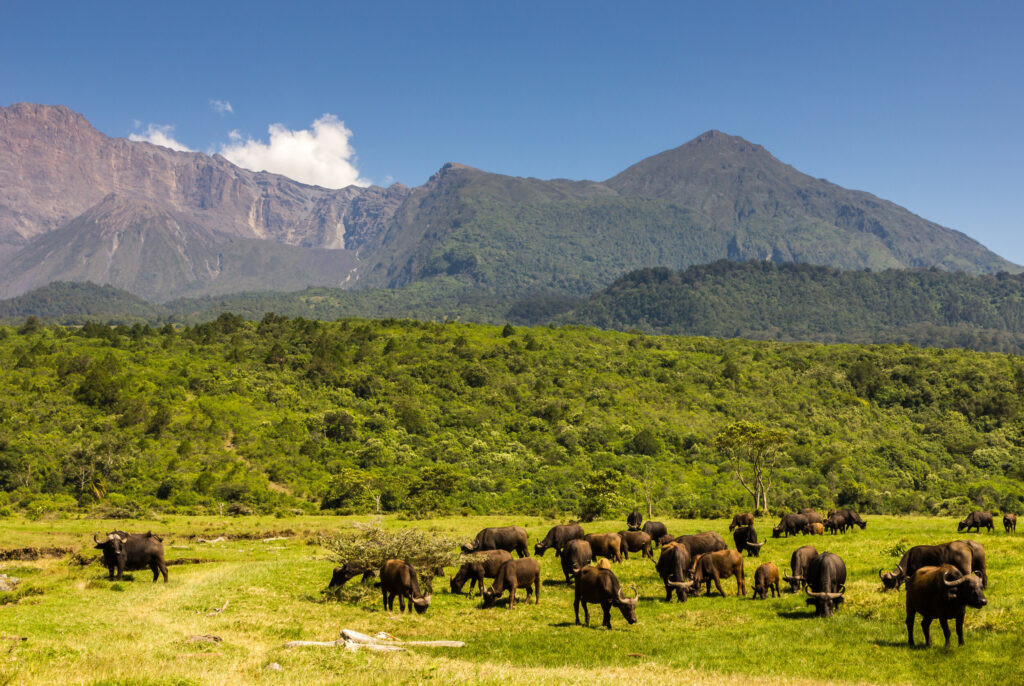
Although there are no lions or lions, and rarely seen cheetah, leopard, and hyena, visitors observe one of the country’s largest populations of giraffe, along with populations of zebras, buffaloes, waterbuck, bushbuck and other species of antelope. If you are lucky, you will spot a handful of elephants, hippos, shy dik-diks, and red forest duikers that roam the region.
The Ngurdoto Forest in Arusha National Park has a population of primates including blue monkeys and black and white colobus monkeys. The park is also home to over 400 bird species including the bright pink flocks of flamingoes covering the Momella Lakes.
If you are looking for more adventure, consider climbing nearby Mount Meru, Tanzania’s second – highest mountain, or conquer Mount Kilimanjaro, the highest peak in Africa.
Lake Manyara National Park
Located between Tarangire National Park and Ngorongoro Crater, Lake Manyara National Park is a beautiful destination in Tanzania Northern Circuit Safari. The park is renowned for its unique ecosystems bursting with diverse wildlife, hosting at least 11 different ecosystems, including groundwater forests, floodplains, hot springs and open savannahs.
The majority of the park’s size is covered by Lake Manyara, a beautiful soda lake that attracts hippos, pink flamingoes and more than 300 other migratory birds.
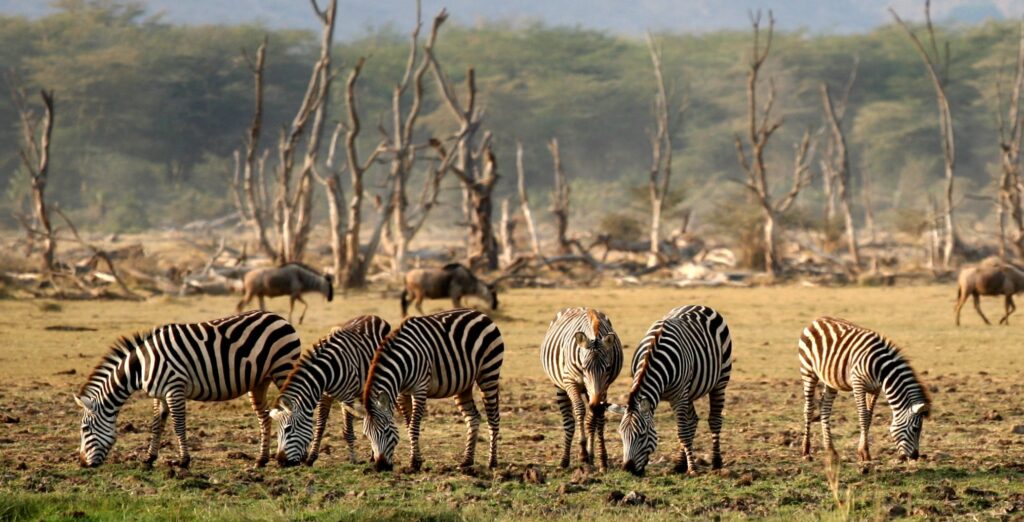
Also, Lake Manyara National Park boasts one of the world’s highest concentrations of large mammals. You will likely spot huge herds of elephants and the famous tree climbing lions, along with significant wildebeest, zebra, buffalo, giraffe, warthog, impala and waterbuck populations. The park is also home to primates including resident baboon, vervet monkeys, common monkey and nocturnal bush babies as well as leopards and hyenas though they are more challenging to spot.
Lake Natron & Ol Doinyo Lengai
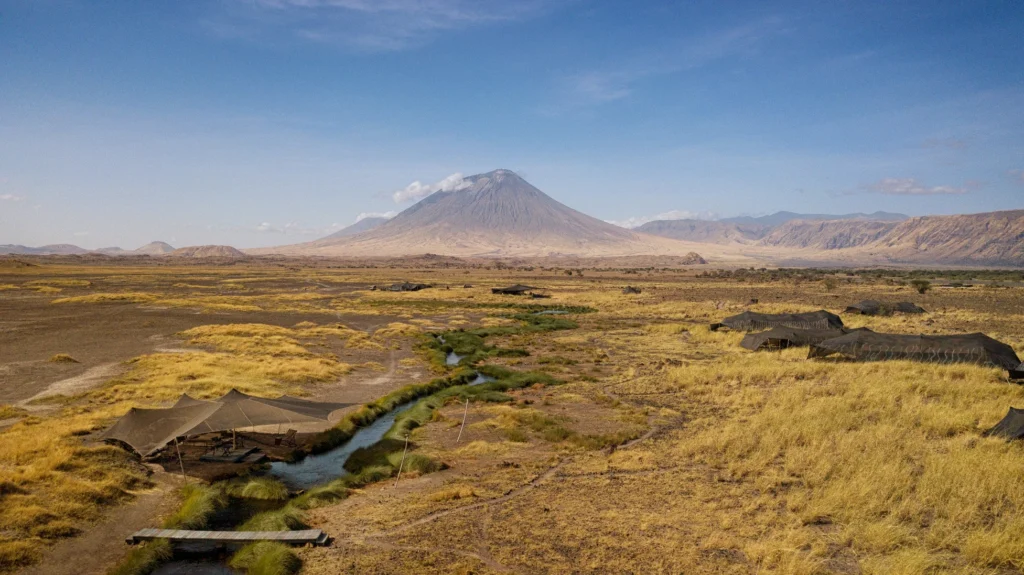
Situated not far from the popular Northern Circuit, Lake Natron and Ol Doinyo Lengai offer an off the beaten track adventure. It is hot, dust, and out worldly. Lake Natron and its surroundings show you an unreal landscape that photographers will adore.
During the dry season evaporation from Lake Natron triggers an algae reaction that turns this huge alkaline lake red. A phenomenon that can be seen from space, if animals or birds drink the lake’s toxic water will die. The flamingoes are exception, having evolved to live in this hostile environment, over 2 million flamingoes come here to breed. Waves of pink flamingoes feed on the algae, whilst the impressive shape of Ol Doinyo Lengai stands in the background – a conical-shaped volcano and home to the Maasai’s god – Ngai.
Mahale Mountains National Park
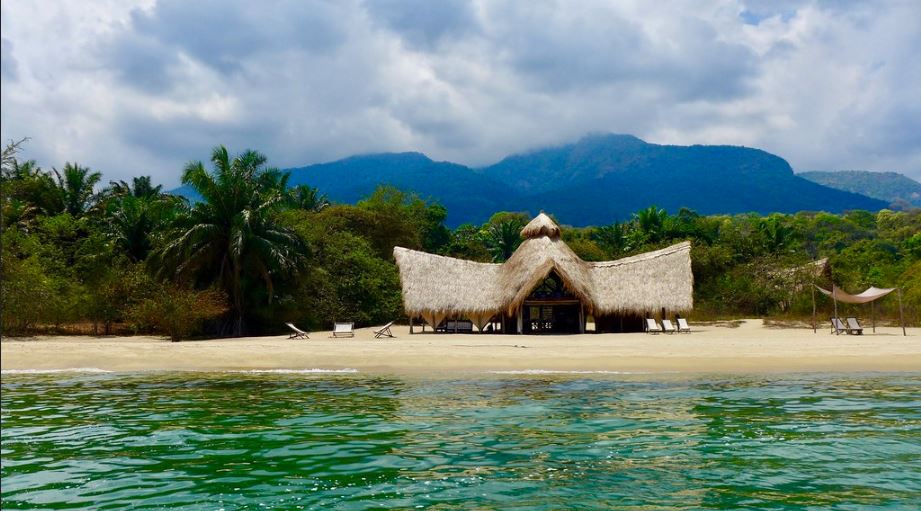
The Mahale Mountains National Park is lie a fairytale dreamland where forested mountains rise away from the white sandy beaches of Lake Tanganyika. Sundowners on a dhow is the best way to take in the beautiful views of this magical tropical paradise.
Accessed by plane and then boat, Mahale Mountains National Park is a remote park with very few vistors and offers a chance to disconnect from the world. The forest park can only be accessed on foot. While in the forest, discover the waterfalls and swim in the plunge pools, spot outstanding birdlife and with a bit of luck even rare primates such as chimpanzees. Relax, snorkel or dive after a forest trek.
Ngorongoro Conservation Area
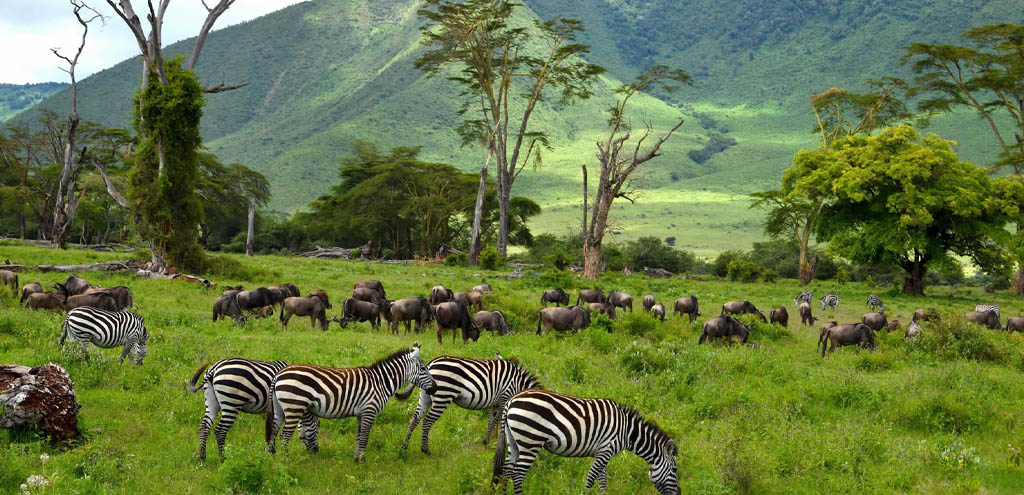
Recognized as one of the Seven Natural Wonders of Africa, the Ngorongoro Conservation Area is one of the remarkable places to visit on a Tanzania Safari. It centers on the Ngorongoro Crater, an ancient volcanic caldera supporting extraordinary wildlife density and was designated as a World Heritage Site by UNESCO.
It’s named after the might Ngorongoro Crater, an ancient volcanic crater spanning about 100 square miles (260 km²) and surrounded by a crater wall about 1,970 feet (600m) high. It is the world’s largest intact and unfilled caldera, home to over 25,000 large game animals.
The Ngorongoro Crater protect Tanzania’s last remaining black rhino population. Other wildlife species found in the crater include the Big 5 – lion, leopard, cape buffalo, elephants and rhinos, hippos, flamingoes and plains game inhabiting the soda lakes and grasslands. The conservation area preserves evidence of human life spanning millions of years, including hominin footprints and fossil sites at Olduvai Gorge. Also, you can visit the Maasai Cultural village to learn more about the Maasai people.
Nyerere National Park
Formerly known as Selous Game Reserve, Nyerere National Park is Africa’s largest game reserve, home to the Big Five and an extraordinary amount of wildlife, and remains largest unheard of by tourists.
This beautiful Tanzania safari destination is located in southern Tanzania, far from the crowds of the more popular parks in the Northern Circuit. Visitors to Nyerere National Park will find a much quieter, yet just as impressive, safari experience.
While on a safari in Nyerere National Park take a game drive on which you will spot some of the 120,000 buffaloes that inhabit the region, along with the 4,000 lions, one of the largest populations in the world. You can also see elephants, cheetahs, leopards, crocodiles, giraffes, zebras, impalas, wildebeests, eland, and hyenas. You will even have a chance of spotting the critically endangered black rhinos or the African wild dog, with around 50% of their remaining population found in Nyerere National Park.
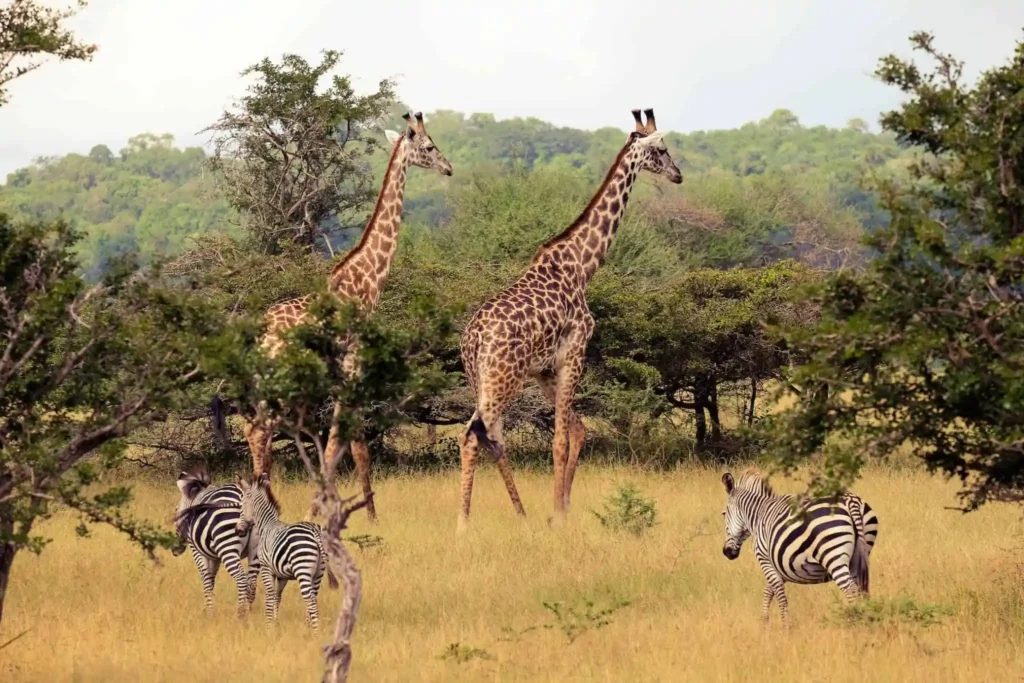
Take a boat safari along the rivers and wetlands to spot some of the 40,000 resident hippos and the huge population of crocodiles. Also, you can explore the park on foot with an exhilarating walking safari or go-off road in your guided safari vehicle in search of the incredible wildlife.
Tarangire National Park
Renowned for its incredibly high concentrations of wildlife and stunning natural scenery, Tarangire National Park is one of the most scenic parks in Tanzania and a great place to visit. The park is located in the Manyara region of Northern Tanzania, less than two hours from Arusha, and is often a surprising favorite for travelers.
During the dry season (June to October), the Tarangire River becomes the only water source for scores of animals, drawing large herds of elephants (sometimes up to 300 strong), zebra, giraffes, impalas, elands, and warthogs to drink there.
Animals to spot in Tarangire National Park include lions, spotted hyenas, leopards, cheetahs, African wild dogs that have been sighted in the park.