“The greatest wildlife show on Earth” – and it plays out every single day in the heart of Tanzania.
What is the Great Migration?
The Great Migration, also known as the “Great Wildebeest Migration,” is the most incredible wildlife occurrence on which over 1.5 million wildebeest, accompanied by hundreds of thousands of zebras and gazelles, embark on an annual journey across the Serengeti-Mara ecosystem in search of water and fresh grazing .
In the local Swahili language, wildebeests are known as Nyumbu. These famous animals are even-toed, horned, greyish-brown creatures with striking resemblance to cattle. The name “GNU” is pronounced as “g-new” by the Afrikaans, referencing their menacing appearance presented by their large head, shaggy mane, pointed beard, and sharp, curved horns. The wildebeests and the Great Migration are the highlight of Tanzania wildlife safaris and a reason why the country, as well as Serengeti National Park, is visited by millions of tourists with intentions of witnessing millions of wildebeests in the endless plains of Serengeti.
Understanding the Wildebeest
Physical Characteristics
Wildebeests belong to the Bovidae family, which also includes antelopes, cattle, and sheep. Male wildebeests are larger than females, and both have heavy forequarters compared to their hindquarters. They have a large, box-like head with curving horns, a great coat, black mane, and a beard in either black or white. At maturity, wildebeests can grow to reach the length of 8 feet and 4.5 feet tall, and they can weigh up to 600 pounds. Both males and females grow horns.
Species Found in the Serengeti-Mara Ecosystem
The species found in the Serengeti-Mara ecosystem which takes part in the Great Migration are the Western White-bearded wildebeests. In the east of the Gregory Rift in Kenya and Tanzania, there are the Eastern White-bearded species, and the Brindled or Blue wildebeests in the south of the Zambezi River.
Behaviour and Diet
In nature, wildebeests are driven by their appetites throughout their lives. Because of their large size, they continuously move in search of favourable supplies of grass and water. The famous population of wildebeests in Serengeti plains is a very large nomadic group which is why they make a migratory journey of 800 to 1,610 kilometres each year .
Quick Facts About Wildebeests
Wildebeests are very noisy creatures – bulls have a wide array of loud vocalizations from moans to explosive snorts
The majority of female wildebeests give birth around the same time – about 80 percent of the female calves are born within the same two-to-three-week period, creating a glut for predators and enabling more calves to survive the crucial first weeks after their birth
Calves learn to walk within minutes after their birth and within a day they are able to keep up with the herd
Wildebeests have a life span of up to 20 years old
Wildebeest as a Keystone Species
Wildebeests are best described as a reliable source of food for the predators such as lions, cheetahs, wild dogs, hyenas, and leopards. However, their role in the ecosystem goes far beyond being prey. Wildebeest are climate heroes of the savanna . Their grazing reduces overgrown vegetation and curbs destructive wildfires, while their movements aerate the soil and enrich it with nutrients and carbon from their dung . Healthier soil promotes new and diverse vegetation growth, which helps to absorb carbon dioxide from the atmosphere. In fact, when properly managed, savannas like the Serengeti are capable of capturing at least as much carbon as tropical rainforests . Consuming more than 4,500 tons of grass every day, wildebeest act as natural lawn mowers, keeping vegetation low, which helps reduce the frequency and intensity of wildfires . It is estimated that every increase of 100,000 wildebeest translates into 10% less area burned .
The Great Wildebeest Migration:
The Great Migration is an annual continuous movement of over 2 million animals in search of food and water . The movement of these animals happens in sections of Serengeti National Park at different times of the year, with the most recognized crossing between Serengeti National Park in Tanzania and Masai Mara National Reserve in Kenya, passing through the Mara River.
Population Numbers
Wildebeest: 1.3 to 1.5 million
Zebras: 200,000 to 300,000
Gazelles: Up to 500,000 (Thomson’s and Grant’s)
Total: Up to 2.5 million animals
Why the Migration Occurs
The Great Migration occurs as the wildebeests embark on an annual journey seeking out nutritious grass to feed on, moving according to the rainfall .
At the beginning of each year, rainfall in southern Serengeti brings bountiful grassy landscapes, attracting the animals as the calving season approaches
As the months pass, the rains move north and the animals follow suit to ensure they have a steady supply of food and water
Though all the animals move on a quest to locate green pastures and water, the wildebeests and gazelles prefer short grasses, while the zebras tend to go for longer alternatives
Despite the thousands of wildebeests, zebras, and gazelles that are lost along the way, each animal must take the risk, as their herbivore diets primarily consist of grass.
The Migration Calendar: Month by Month
January – March: Calving Season in the Southern Serengeti
The year begins with one of the most spectacular events: the calving season in Tanzania. Around 500,000 calves are born on the nutrient-rich southern plains of the Serengeti ecosystem, with February seeing up to 8,000 births daily . The wildebeests, zebras, kobs, and gazelles gather and build up a strong team to give birth to young ones. The presence of these vulnerable young ones attracts a lot of predators – lions, cheetahs, hyenas, and leopards – to feast on them. Best locations: The Ndutu region and Lake Masek (straddling the Ngorongoro Conservation Area and the southern part of Serengeti National Park) .
April – May: The Herds Begin to Move
As the “long rains” arrive, the herds begin their journey north and west. The massive concentrations fragment into smaller groups, moving past Simba Kopjes towards Moru and the western corridor . March remains busy due to the tail end of calving season, but April offers better value and fewer tourists, despite being the wettest month. Best locations: Moru, Western Serengeti, Grumeti Reserves .
May – June: The Grumeti River Crossings
May through early June represents excellent value for Great Migration safaris. The herds spread out as they move north. This is when the herds reach the Western Corridor and the Grumeti River, facing their first major tests against the waiting crocodiles .
The Western Serengeti Wildebeest Migration is one of the deadliest migration episodes in Serengeti due to the high concentration of predators such as Nile crocodiles, leopards, lions, cheetahs, and African wild dogs. The rut (mating season) also occurs when over a million wildebeest reach a frenzy of chaotic activity, typically peaking between May and June . Best locations: Grumeti Reserves, Central Serengeti (Seronera), Mbalageti River .
July – September: The Mara River Crossings
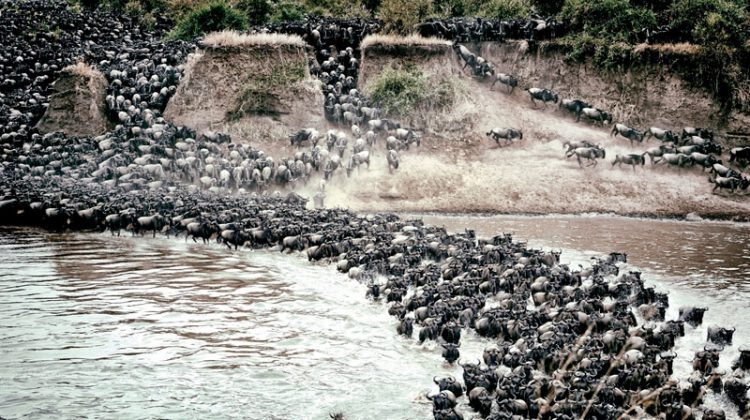
For most people planning a Great Migration safari, this is what they’re after: the Mara River crossings. August and September offer the best chances in the Northern Serengeti (Kogatende area), where wildebeest hurl themselves into crocodile-infested waters in chaotic, adrenaline-fuelled crossings . The Northern Serengeti Wildebeest Migration is the most spectacular of the Great Migration and is listed as one of the seven wonders of animals on earth .
What You May Not Know:
Wildebeest often cross back and forth multiple times
They mill around the river rather than stampeding in one direction
Expect injuries, visible deaths, carcasses, and predation – it’s brutal, raw, and emotionally intense
You might also spend entire days waiting alongside 50 other vehicles
Best locations: Northern Serengeti (Kogatende), Maasai Mara National Reserve .
August – October: The Migration in the Northern Serengeti
Once September arrives, most animals have attempted the formidable Mara River crossing. Those that are successful make their way to the Maasai Mara region of Kenya. The Northern Serengeti Wildebeest Migration happens from July to September as the animals cross the Mara River in attempts to enter the plains of Masai Mara National Reserve of Kenya . Best locations: Northern Serengeti (Kogatende area), Lamai Wedge.
October – December: The Return Journey
When the rains begin to simmer down in November, the herds return south and journey back towards the Serengeti . The ‘short rains’ trigger the southward migration through the Loliondo Game Controlled Area and Eastern Serengeti. By the 1st December, the first herds are settling down into the southern Serengeti, and they are firmly camped into the short grass plains in time for calving, ready for the whole epic cycle to start all over again . Best locations: Loliondo, Lobo area, Eastern Serengeti, Southern Serengeti .
The Mara River Crossings: What to Expect
Build-Up
At first, the herds mill about nervously on the riverbanks. Wildebeest may spend hours pacing, approaching the edge, then pulling back . Dust, calls, and the sheer weight of numbers create an atmosphere of anticipation. Patience is essential – crossings can begin suddenly, or not at all, depending on the mood of the herd .
Crossing
When the first animals commit, the rest follow in a surge. The riverbanks erupt in dust and sound as wildebeest and zebras leap into the water, hooves thrashing and splashes rising. Calves cling to their mothers, while the strong currents test even the fittest adults .
Predators
Crocodiles lie in wait beneath the water’s surface, while lions and hyenas often patrol the far banks . Not every animal makes it across, but the herds endure, driven by instinct to reach greener pastures.
The Best Way to Watch
Patience: Crossings can take hours to begin and may fizzle out entirely. Being ready to wait is part of the experience
Respect: Vehicles must keep a careful distance to avoid disturbing natural behaviour
Stay inside your vehicle: Tourists must remain inside vehicles at all times during crossings
Many first-time safari-goers fixate on river crossings, but safari experts caution against building an entire itinerary around them . If you’re determined to witness a crossing, book at least three nights at the river with a private vehicle (book early to guarantee one in peak season) .
Key Points to Remember:
The Great Migration is a continuous process, not a single event
Timing varies each year depending on rainfall and can be unpredictable
Crossings are never guaranteed – the herds may approach the river and turn back
Over 250,000 animals die each year during the migration
The migration is not one massive herd – animals move in groups
The Importance of the Great Migration
Conservation Significance
The Great Migration has been recognized by the World Book of Records as the “World’s greatest annual terrestrial wildlife migration” . It is a UNESCO World Heritage Site that has won the “Africa’s Leading National Park” award eight times .
Ecological Importance
Ecosystem maintenance: Wildebeest consume over 1.7 million tons of grass annually and deposit approximately 3,500 tons of dung each day, feeding up to 100 species of dung beetles and enriching soil fertility
Wildfire suppression: Wildebeest grazing reduces catastrophic wildfires by keeping vegetation low
Carbon storage: Their movements help integrate carbon into long-term soil reservoirs
Economic Significance
The Great Migration drives the socio-economic fabric of Tanzania’s tourism industry, attracting millions of tourists to witness this incredible event .
Planning Your Migration Safari
How to See the Great Migration
Before you decide on where you want to see the Great Migration, it is important to be aware that it is a continuous happening that takes place at different locations throughout the year. This means the time you visit Tanzania will determine where to go to see the Great Migration as it takes place.
Hiring an experienced tour provider is your best chance of seeing the Great Migration in Tanzania. Our Tanzania Travel Experts will recommend some of the finest spotting locations along the typical Great Migration route.
Key Tips
Book early: The best budget-friendly camps and lodges get taken up quickly, especially during the Great Migration season (July–October)
Stay longer: Crossings can take hours or days to begin – spending multiple nights at the river improves your chances
Consider shoulder seasons: May–June and November offer excellent value with fewer crowds
Stay flexible: Weather patterns affect animal movement – your guide will adjust routes accordingly
Safari Experiences
Whether you are planning a budget camping safari or a luxury lodge experience, the Great Migration offers unforgettable wildlife encounters. Choose from:
Game drives: The primary way to explore the Serengeti and follow the herds
Hot air balloon safaris: Float above the plains at sunrise for breathtaking views of the migration
Walking safaris: Immerse yourself in the ecosystem with expert guides
Photography safaris: Capture the drama of river crossings and predator action
Ready to Witness the Greatest Wildlife Show on Earth?
The Great Migration is one of the most incredible spectacles that attracts thousands of visitors to Tanzania every year. Now that you know when the Great Migration is in Tanzania, you can start organizing your safari. Planning a safari around the time of the Great Migration without experience is a tricky task. Thankfully your Tanzania Safari Experts are available 24/7 to help you.
Contact Serengeti Wildlife Safari today for a personalized quote based on your travel dates, group size, and accommodation preferences. Whether you’re seeking a budget-friendly camping safari or a luxury lodge experience, we’ll help you create memories that last a lifetime.