
Beyond the Big Five and other abundant wildlife species, Tanzania is a haven for bird enthusiasts with a total 1,160 bird species including a large number of unusual and endemic bird species.
Birding is becoming extremely popular in Tanzania and understandably so, the country offers some of the most rewarding sightings of winged species within the whole of Africa.
Here is the top 10 birds you will see n a Tanzania Safari.
Big Birds
- Ostrich
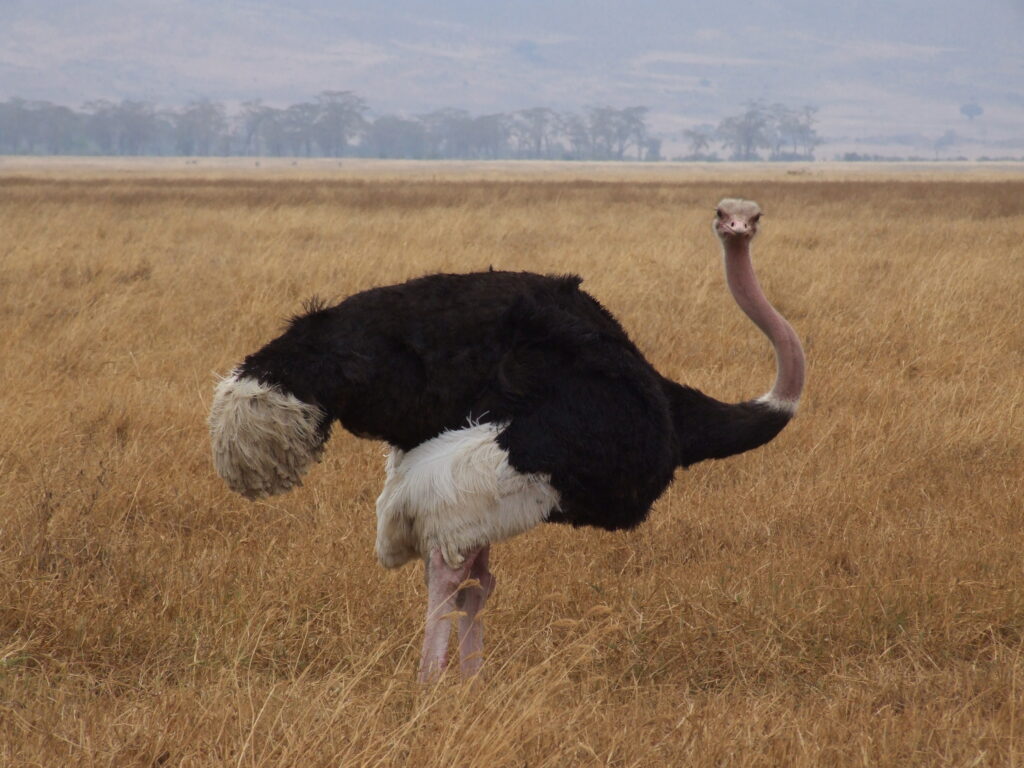
The Ostrich is enormous bird instantly recognized by its size, it is prevalent through Tanzania. These flightless birds can run at speeds over 43 miles per hour, making them the fastest land birds in the world.
Female ostriches have grey-brown plumage, providing good camouflage during the day, while male ostriches have black feathers, making them stealthy at night.
Ostriches communicate through a range of sounds including snorts, whistles and loud booming noises when predators are near. It is common to hear them before you get sight of them.
- Twany Eagle
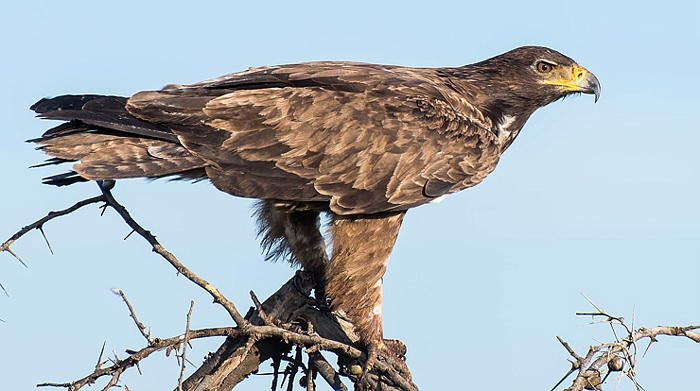
Short-legged and heavily feathered in white, reddish-brown or grey brown, the Tawny Eagle is a large bird of prey found nearly everywhere in Tanzania. It is the most widespread eagles in Africa, thriving in diverse habitats except dense forests and true deserts.
Twany Eagles are formidable hunters, diving from their perches and seizing prey in their sharp talons. They are not picky eaters, either, and are known to snack on insects when they get a chance.
- Marabou Stork
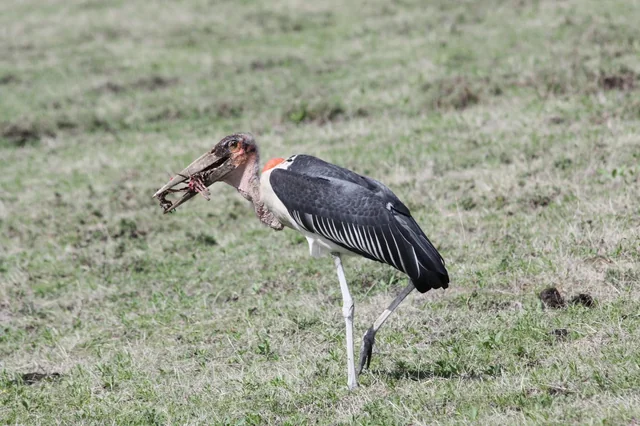
The Marabou Stork is a large wading bird in the stork family Ciconiidae native to Sub-Saharan Africa. In Tanzania, they are found throughout Serengeti National Park.
The Marabou Stork has a massive dagger-like bill and pink head that appears as if sunburned. Also, they have huge wingspans that enable them to soar high above the ground. They are often seen around carrion, stealing scraps from the kills of major predators.
The lack of feathers around their heads and neck enable it to stay clean while eating messy food. Their diet consists predominantly of carrion, fish, termites, locusts, frogs, lizards, baby crocodiles, snakes, rats, mice, and small birds.
Marabou Storks are intimidating, opportunistic creatures. When its throat sac is inflated, other marabous take this a sign of dominance and get out of the way. If they are around a grass fire, it is common for a stork to march a head of the flames, attempting to grab any prey trying to flee.
Medium-sized Birds
- Grey Crowned Crane
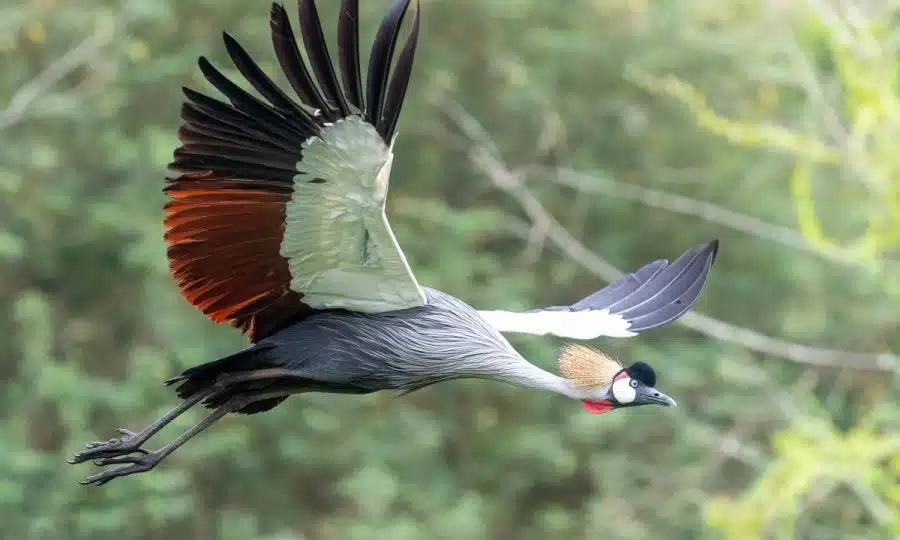
The Grey Crowned Crane also known as gray crowned crane is a large crane species native to Sub- Saharan Africa, occurring in the dry savannah, although it nests in somewhat wetter habitats, and can also be found in marshes, cultivated lands and grassy flatlands near rivers and lakes.
The males are commonly known for their performative dance, where they flap their colorful wings and skip around for potential mates. Despite the name, there crown is always golden-yellow.
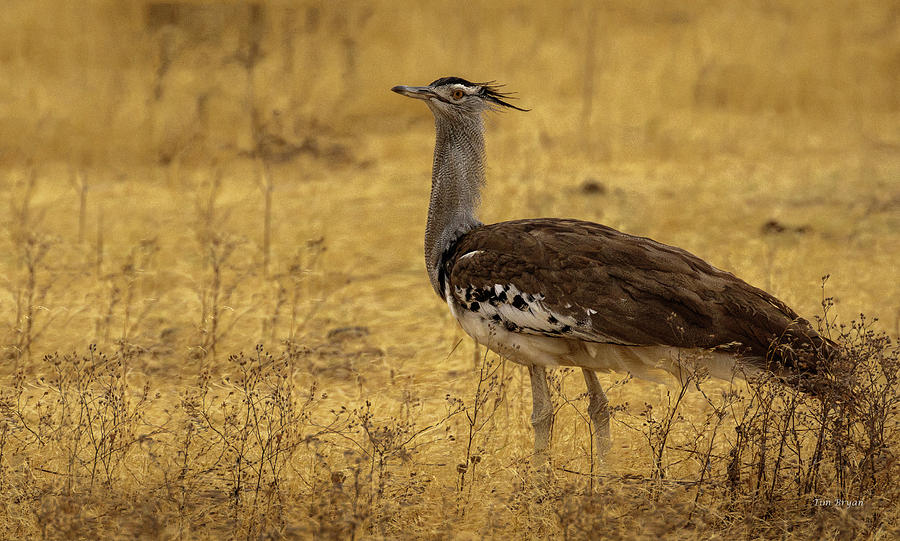
- Kori Bustard
Kori Bustard is the largest flying bird in Africa, and a member of the bustard family. With only three front toes, this bird prefers wide open grassland and lightly wooded savannah. They are notably carnivorous, their diet consists of small mammals, lizards, snakes, seeds, berries and insects.
During mating, the male inflates his esophagus up to four times its normal size and moves its tail feathers to reveal as much of its white under feathers as possible. Kori Bustard have a striking appearance as well as a striking low-pitched booming sound, often made during courtship with a female.
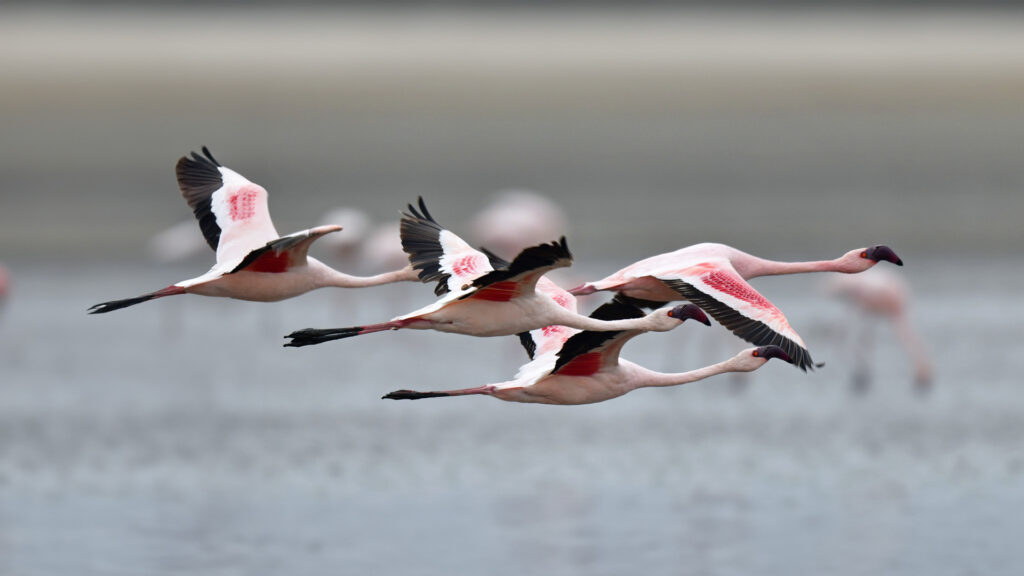
- Lesser Flamingo
The pink-hued lesser flamingoes are the smallest flamingo in the world, despite its tall, large body and question-mark shaped neck. Pink plumage defines this lanky bird, which lives in large groups around Tanzania’s rift valley lakes such as Lake Natron.
Lesser flamingo diet consists almost entirely of microscopic blue – green algae and other organisms found in the lake, but will also eat small aquatic invertebrates.
Small Birds
- Vitelline Masked Weaver
The Vitelline Masked Weaver is a tiny, red-eyed bird found all over Tanzania national parks such as the Serengeti. Males have distinctive, bright yellow plumage with a pointy bill and chestnut coloring on the breast and crown. Females are much duller but have yellow streaks on their backs.
Their vocalizations include “Chek” noises and a fuzzy, garbled song, like radio static.
A male masked weaver builds a nest in the hopes that a female will pick it. However, females are very picky and will reject most nests.
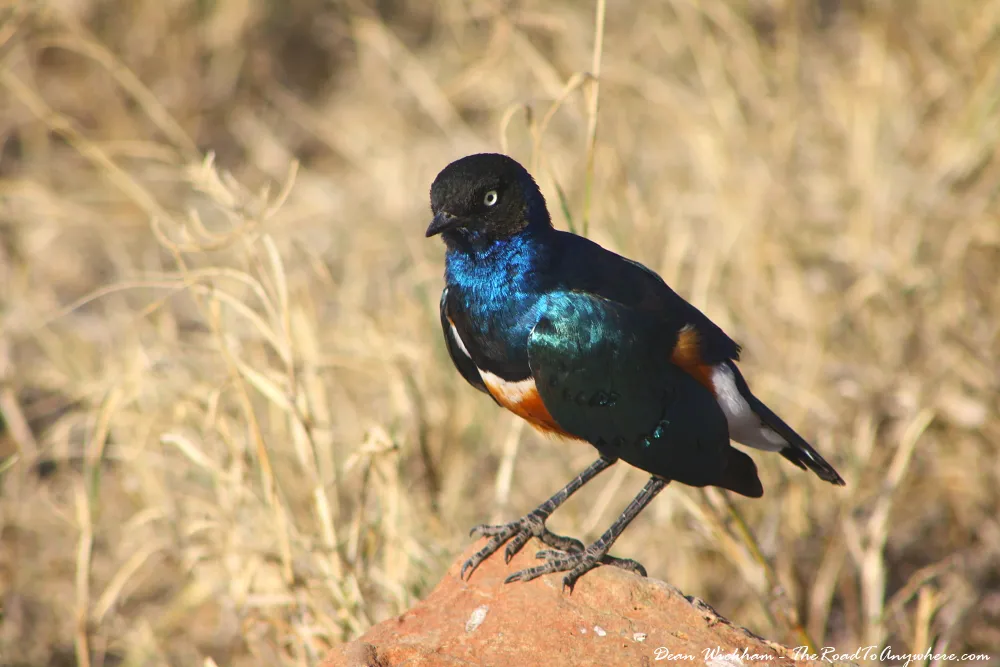
- Superb Starling
The Superb starling is a beautiful bird with stunning iridescent plumage makes it worthy its name. They are found broadly across northern Tanzania and travel in small flocks. Formerly known as Spreo superbus, Superb starling is a member of the Starling family of birds.
These birds are similar to many varieties of starling, but are easily distinguished by their white chest band, separating the blue breast from the fire-orange belly.
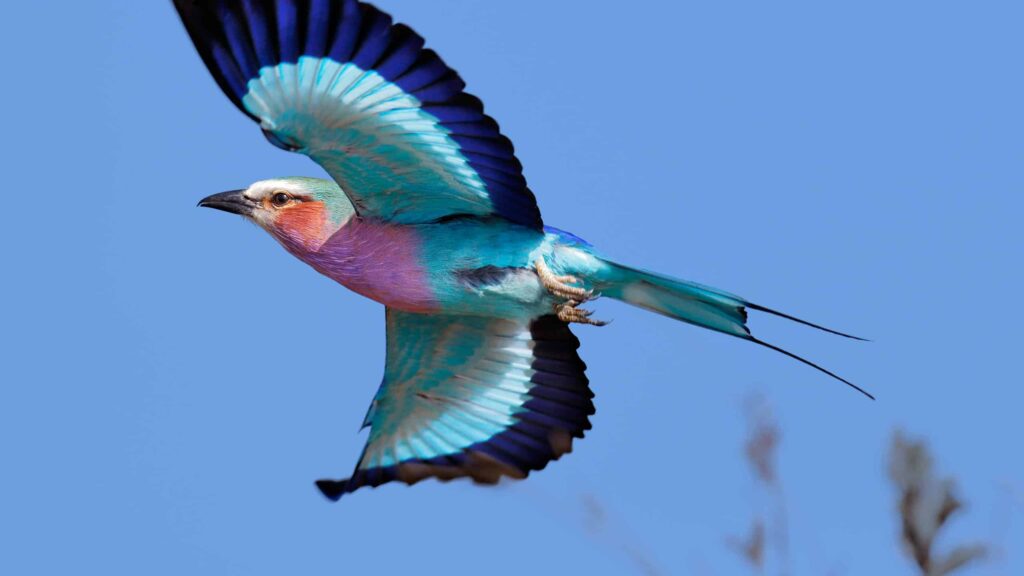
- Lilac-Breasted Roller
The lilac – Breasted Roller is wide spread in Tanzania, the bird belongs to the roller family of birds and can be found in sub-Saharan Africa and the Arabian Peninsula. It is habitats are savannahs and open woodlands, but it cannot be found in treeless areas.
The lilac – breasted roller is found extensively through Tanzania, and its rust-colored cheeks, green crown, lilac breast and blue body which make it highly visible. This bird is called a roller because its mating display often includes aerial stunts, such as rolling from side to side quickly, not to mention plenty of diving, swooping and loud, harsh cries.
- Von Der Decken’s Hornbill
Also known as Zazu from the Lion King, the Von Der Decken’s Hornbill is native to Tanzania’s dry regions.
Males have large, red bills while females have black bills. Like other hornbills, female Von der Decken hornbills bury themselves a live to hatch their chicks. For two months, the male feeds the female and the chicks through a slit in the mud nest.